
Walk down the supplement aisle of any pharmacy, and you will likely see rows of bottles promising better digestion. Among the most popular options are probiotics and digestive enzymes. Because both are marketed for gut health, it is easy to assume they do the same thing.
They do not. Probiotics and digestive enzymes serve entirely different functions in the human body. One helps break down the food you just ate, while the other maintains the long-term environment of your intestines. Taking the wrong one for your specific concern usually leads to frustration and wasted money.
This guide will explain exactly what probiotics and digestive enzymes are, how they function differently, and what current research says about their use. We will also cover safety considerations and provide tips on how to evaluate these supplements so you can make informed decisions about your digestive health.
Quick Answer
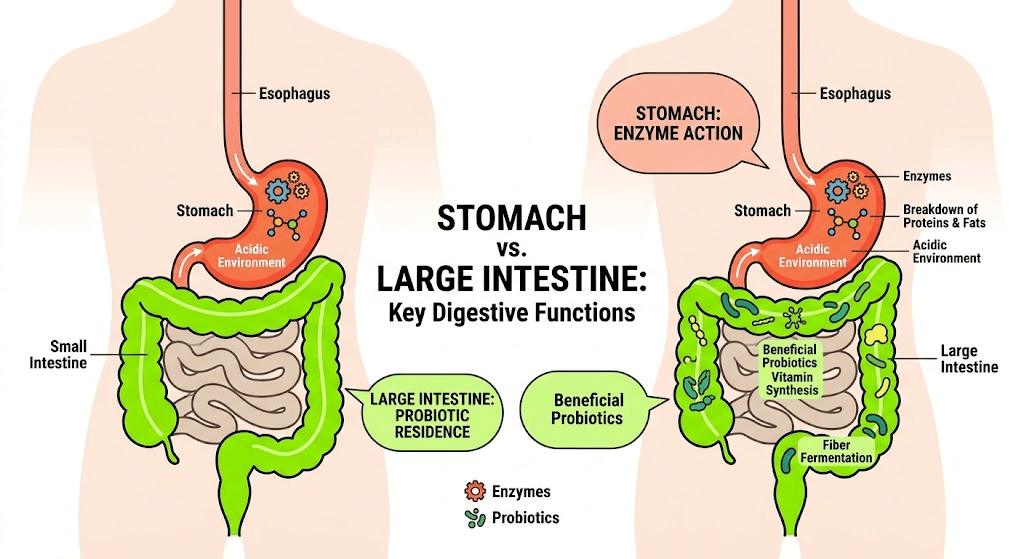
Digestive enzymes act like chemical scissors that break down food components (proteins, fats, carbohydrates) in the stomach and small intestine so your body can absorb the nutrients. Probiotics are live, friendly bacteria that live primarily in the large intestine, where they help balance your gut microbiome, support immune function, and manage overall digestive health.
What Are Digestive Enzymes?
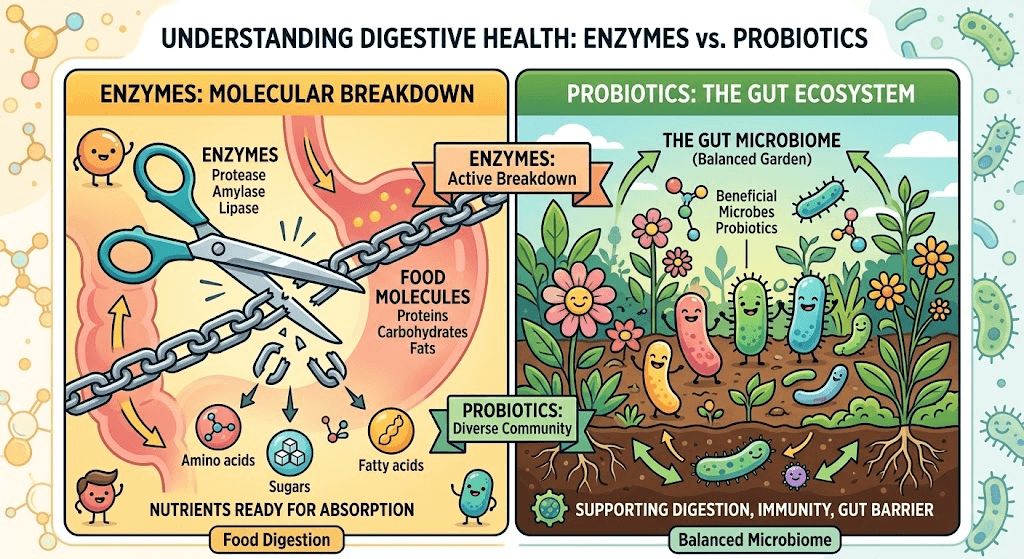
Your body naturally produces digestive enzymes in the salivary glands, stomach, pancreas, and small intestine. Their job is strictly mechanical. When you eat, food is too large for your body to absorb. Enzymes attach to food particles and break them down into smaller molecules.
For example, when you eat a piece of chicken, protease enzymes break the protein down into amino acids. When you eat bread, amylase enzymes break the carbohydrates down into simple sugars. If your body does not produce enough of a specific enzyme, the undigested food moves through your digestive tract, often causing gas, bloating, or diarrhea.
What Are Probiotics?
Probiotics are live microorganisms—mostly bacteria and some yeasts—that provide health benefits when consumed in adequate amounts. Your digestive tract is home to trillions of microbes, collectively known as the gut microbiome.
Unlike enzymes, probiotics do not directly digest your meals. Instead, they set up residence in your gut, mostly in the large intestine. There, they help keep harmful bacteria in check, support the cells that line your gut, and influence your immune system. You can get probiotics from fermented foods like yogurt, kefir, sauerkraut, and kimchi, or from dietary supplements.
Common Causes of Digestive Imbalance
Many everyday factors can throw off either your enzyme production or your microbiome balance. Note that these are general contributing factors, not diagnostic criteria.
- Age: Natural enzyme production slowly decreases as we get older.
- Dietary choices: Diets high in processed foods and low in fiber can starve beneficial gut bacteria.
- Antibiotic use: While antibiotics kill harmful bacteria causing an infection, they also wipe out the beneficial bacteria in your gut.
- Chronic stress: High stress levels can affect both the speed of digestion and the composition of the gut microbiome.
- Medical conditions: Certain conditions affecting the pancreas, gallbladder, or intestines can severely limit natural enzyme production.
Common Signs or Symptoms
When the digestive system is not functioning smoothly, the body sends signals. Remember that symptoms alone cannot confirm a diagnosis, as many gut issues share similar warning signs.
Signs that enzyme production might be low often include bloating quickly after a meal, excess gas, a feeling of heaviness in the stomach, or noticing undigested food in your stool.
Signs that gut bacteria might be imbalanced can include irregular bowel movements, persistent occasional gas, changes in immune response, or sluggish digestion. If symptoms are severe or ongoing, it is time to speak with a doctor.
How the Relevant Supplements Are Supposed to Work
Supplement companies offer both enzymes and probiotics in pill, powder, or liquid form. Here is how they are intended to function:
Digestive enzyme supplements are taken right before or during a meal. They are designed to mix with the food in your stomach and assist your body’s natural enzymes in breaking down that specific meal. Their action is temporary and immediate.
Probiotic supplements are taken regularly, often daily, to introduce new beneficial bacteria to the digestive tract. They are supposed to survive the harsh acid of the stomach and travel to the large intestine, where they can colonize and influence the gut environment over time.
For a broader look at dietary changes that support the gut, you can read our article on improving overall gut health.
Common Ingredients in Digestive Supplements
Understanding the labels on these products can be confusing. Here is a breakdown of what you will typically find.
Common Digestive Enzymes
- Amylase: Breaks down carbohydrates and starches.
- Protease: Breaks down proteins.
- Lipase: Breaks down fats.
- Lactase: Specifically breaks down lactose, the sugar found in milk. (This is the enzyme missing in people with lactose intolerance).
- Alpha-galactosidase: Breaks down complex carbohydrates found in beans and cruciferous vegetables.
Common Probiotic Strains
- Lactobacillus: A common group of bacteria found in yogurt and fermented foods. Different strains have been studied for their potential to help with diarrhea and general digestion.
- Bifidobacterium: Often found in dairy products, these strains are heavily researched for their potential to support irritable bowel symptoms.
- Saccharomyces boulardii: A friendly yeast that has been studied for its ability to help manage antibiotic-associated diarrhea.
What Does the Evidence Show?
The scientific backing for these two categories of supplements is quite different.
For Digestive Enzymes: The evidence for targeted enzymes is strong. For example, clinical studies consistently show that over-the-counter lactase supplements help people with lactose intolerance digest dairy products without symptoms. Similarly, alpha-galactosidase has been shown in human trials to reduce gas caused by beans and vegetables. However, the evidence is mixed regarding broad-spectrum enzyme blends (supplements containing amylase, lipase, and protease) for healthy individuals who do not have a diagnosed enzyme deficiency. While some people report feeling less bloated, large-scale human trials are limited.
For Probiotics: Research on probiotics is vast but complex. According to the National Institutes of Health (NIH), different strains of probiotics do different things. Studies show that specific strains, like Saccharomyces boulardii, can effectively reduce the risk of diarrhea caused by antibiotics. However, for general gut health, the results have been mixed. Because everyone’s microbiome is unique, a probiotic strain that helps one person might not do much for another.
Risks and Side Effects
While generally considered safe for most healthy adults, neither probiotics nor digestive enzymes are entirely without risk.
Digestive enzymes can occasionally cause stomach upset, nausea, or diarrhea if taken in very high doses. If you have stomach ulcers, taking certain enzymes (especially protease) might irritate your stomach lining.
Probiotics can cause temporary gas and bloating when you first start taking them as your gut adjusts to the new bacteria.
Always check our guide to supplement safety to understand how dietary supplements can interact with other products you consume. Pay special attention to “proprietary blends” on labels, which hide the exact amounts of each ingredient, making it difficult to know if you are getting a safe and effective dose.
Who Should Be Especially Careful?
Certain groups should not take these supplements without medical supervision:
- People with compromised immune systems: Because probiotics contain live organisms, there is a rare but serious risk of infection for individuals with weakened immune systems or those undergoing chemotherapy.
- People with severe organ illness: Those with pancreatitis, liver disease, or gallbladder issues should only take enzymes prescribed by a doctor.
- Pregnant or nursing women: Always consult a healthcare provider before introducing new supplements.
- Children: Do not give digestive supplements to children unless directed by a pediatrician.
When to Speak With a Healthcare Professional
Occasional gas or indigestion is normal. However, supplements cannot fix structural issues, infections, or serious diseases. You should speak to a healthcare professional if you experience:
- Unexplained weight loss
- Severe abdominal pain
- Blood in your stool
- Chronic diarrhea that lasts more than a few days
- Difficulty swallowing
How to Evaluate a Supplement in This Category
If you and your doctor decide a supplement makes sense for you, use this checklist to evaluate your options:
- Check for specific strains (Probiotics): The label should list the genus, species, and strain (e.g., Lactobacillus acidophilus La-14).
- Look for CFUs (Probiotics): This stands for Colony Forming Units, telling you how many live microbes are in the product.
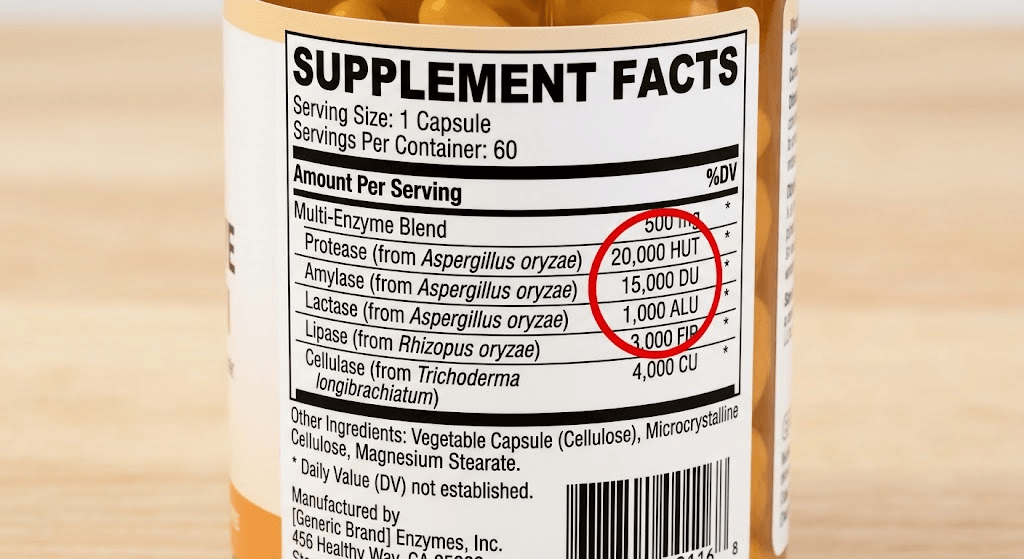
- Check the units of measurement (Enzymes): Quality enzymes are measured in active units (like HUT for protease or ALU for lactase), not just in milligrams (mg).
- Seek third-party testing: Look for seals from organizations like NSF, USP, or ConsumerLab, which verify that what is on the label is actually in the bottle.
- Avoid exaggerated claims: If a product claims to “cure” IBS or “fix” all digestive issues instantly, walk away.
Related Product Analyses
Supplements Diary has also examined several products in the digestive health space to help readers understand their ingredient profiles.
If you are looking into comprehensive enzyme blends, you can read our analysis of Integrative Digestive Formula, which breaks down the specific enzymes and botanicals included in the product.
For those focusing on microbiome support, we have evaluated specific bacterial strains in our PrimeBiome review.
Additionally, probiotics need food to survive. That food comes in the form of prebiotic fiber. To understand how fiber supplements fit into this picture, see our breakdown of Peak BioBoost.
Frequently Asked Questions
Can I take probiotics and digestive enzymes at the same time?
Yes, they can generally be taken together because they perform different jobs in different parts of the digestive tract. Enzymes are typically taken right before a meal to help digest food, while probiotics can be taken at various times of the day depending on the manufacturer’s instructions.
Do I need a prescription for these?
Most probiotics and general digestive enzymes are sold over-the-counter as dietary supplements. However, prescription-strength digestive enzymes are regulated by the FDA and are used specifically for people with diagnosed conditions like exocrine pancreatic insufficiency (EPI).
Do probiotics need to be refrigerated?
It depends on the specific product. Some strains are freeze-dried and shelf-stable, while others require refrigeration to keep the bacteria alive. Always read the storage instructions on the bottle.
Will digestive enzymes help me lose weight?
There is no reliable human research to support the idea that digestive enzymes promote weight loss. Their primary function is simply to help your body break down and absorb nutrients from the food you eat.
Conclusion
Probiotics and digestive enzymes are two distinct tools for managing gut health. Digestive enzymes are the immediate workers, breaking down your meals so your body can absorb nutrients and avoid post-meal bloating. Probiotics are the long-term caretakers, setting up beneficial bacterial colonies in your large intestine to support overall gut and immune health.
Understanding this difference is the first step toward better digestive care. Remember that supplements are intended to add to a healthy lifestyle, not replace a balanced diet rich in natural fibers and fermented foods. Always talk to your doctor before adding a new supplement to your routine to ensure it is safe and appropriate for your specific health needs.
References
- National Institutes of Health (NIH) Office of Dietary Supplements – Probiotics: Fact Sheet for Health Professionals – https://ods.od.nih.gov/factsheets/Probiotics-HealthProfessional/
- National Center for Complementary and Integrative Health (NCCIH) – Probiotics: What You Need To Know – https://www.nccih.nih.gov/health/probiotics-what-you-need-to-know
- Johns Hopkins Medicine – Digestive Enzymes and Digestive Enzyme Supplements – https://www.hopkinsmedicine.org/health/wellness-and-prevention/digestive-enzymes-and-digestive-enzyme-supplements
- National Institute of Diabetes and Digestive and Kidney Diseases (NIDDK) – Your Digestive System & How it Works – https://www.niddk.nih.gov/health-information/digestive-diseases/digestive-system-how-it-works

Dr. Emma Myers is a medical student at UNC School of Medicine in Chapel Hill, with a focus on autoimmune dermatology. She grew up in Durham, North Carolina, and completed her undergraduate studies at the University of Virginia, majoring in Human Biology and Spanish. Emma has worked as a medical assistant in dermatology, gaining experience in cosmetic and medical dermatology. She leads advocacy groups for autoimmune skin disorders and is involved in research on autoimmune diseases, skin safety, and early diagnosis. Outside of medicine, she is a certified yoga sculpt instructor and enjoys outdoor activities with her dog.