
Walking down the supplement aisle or browsing health websites can feel overwhelming when it comes to digestive health. You will likely see terms like prebiotics, probiotics, and the newer term, postbiotics. While they sound similar and all relate to the gut microbiome—the collection of microorganisms living in your digestive tract—they serve entirely different functions.
Understanding how these three “biotics” work together can help you make informed decisions about your diet and whether dietary supplements make sense for your situation. This guide will break down what each term means, what scientific research says about their potential benefits, and how to evaluate products if you decide to look for a gut health supplement.
Quick Answer
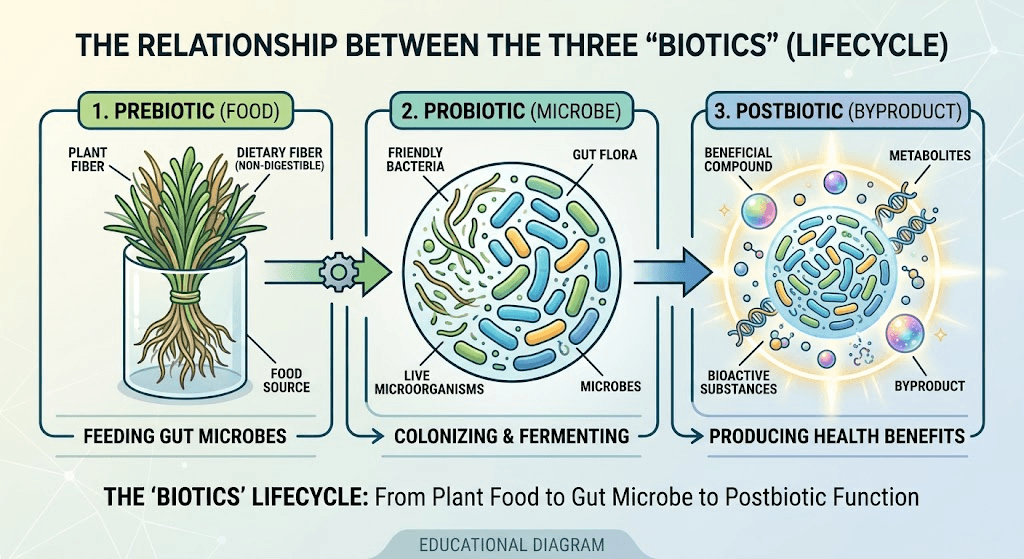
Prebiotics are specialized plant fibers that act as food for the good bacteria in your gut. Probiotics are the live, beneficial bacteria themselves. Postbiotics are the helpful compounds created when probiotics break down and digest prebiotics. Together, they form an ecosystem: prebiotics feed the probiotics, which then produce postbiotics to help support overall digestive function.
What Is the Gut Microbiome?
Before looking at the supplements, it helps to understand the environment they target. Your large intestine is home to trillions of microbes, mostly bacteria, known collectively as the gut microbiome. These microorganisms help break down food your body cannot digest on its own, synthesize certain vitamins, and interact closely with your immune system.
When this ecosystem is balanced, it supports normal digestion and overall well-being. When it becomes imbalanced—a state sometimes referred to as dysbiosis—it can lead to digestive discomfort. The “biotics” family of compounds and microbes are used to try to maintain or restore this balance.
Prebiotics: The Food
Prebiotics are non-digestible carbohydrates, mostly fiber, that humans cannot break down. Because they survive the journey through the stomach and small intestine intact, they arrive in the large intestine ready to be fermented (eaten) by the beneficial bacteria living there. You can think of prebiotics as fertilizer for your gut bacteria.
Probiotics: The Live Microbes
Probiotics are live microorganisms that, when consumed in adequate amounts, may provide a health benefit. They are similar to the beneficial bacteria already naturally present in a healthy human gut. You can consume probiotics through fermented foods like yogurt, kefir, sauerkraut, and kimchi, or through dietary supplements.
Postbiotics: The Byproducts
Postbiotics are the newest addition to the digestive health conversation. When probiotics consume prebiotics, they produce waste products. Fortunately, this “waste” consists of bioactive compounds that are actually highly beneficial to the human body. Examples include short-chain fatty acids, enzymes, and certain vitamins. Essentially, postbiotics are the end-goal; they are the compounds that provide many of the actual health benefits associated with a healthy microbiome.
Common Causes of Gut Imbalance
Many everyday factors can influence the balance of bacteria in your digestive system. Understanding these can explain why someone might look into prebiotic or probiotic support:
- Dietary choices: Diets high in processed foods and refined sugars, and low in fiber, can starve beneficial bacteria and allow less helpful microbes to multiply.
- Antibiotic use: While necessary for treating bacterial infections, antibiotics cannot tell the difference between “bad” infection-causing bacteria and “good” gut bacteria, often wiping out both.
- High stress levels: Chronic stress has been shown to physically alter the composition and function of gut bacteria.
- Poor sleep: Disruptions to your circadian rhythm can also negatively affect the microbiome.
Common Signs or Symptoms of Digestive Imbalance
An imbalanced gut microbiome can present in several ways. While symptoms alone cannot confirm a specific medical diagnosis, common signs of simple digestive distress include:
- Excessive gas and bloating
- Irregular bowel movements, such as occasional constipation or diarrhea
- Stomach discomfort after eating meals
- Feeling overly full or sluggish after eating
Note: Persistent or severe digestive issues should always be evaluated by a healthcare professional to rule out underlying medical conditions.
How These Supplements Are Supposed to Work
Manufacturers formulate supplements to address the microbiome in different ways.
Prebiotic supplements aim to provide a concentrated dose of specific fibers. The theory is that by flooding the gut with the preferred food of beneficial bacteria, those specific healthy strains will multiply on their own. For more on how concentrated fibers work, you can read our Peak BioBoost analysis.
Probiotic supplements introduce billions of live bacteria directly into the digestive tract. The goal is for these temporary visitors to help crowd out unwanted bacteria, support the existing healthy microbes, and help restore a more favorable environment.
Postbiotic supplements are relatively new. By supplying the beneficial compounds directly (like short-chain fatty acids), the goal is to provide the health benefits immediately without having to rely on the live bacteria to produce them in the gut.
Common Ingredients to Look For
If you read the label on a digestive health supplement, you will likely see some of these specific ingredients:
Common Prebiotics
- Inulin: A type of soluble fiber found naturally in chicory root, onions, and asparagus.
- Fructooligosaccharides (FOS): Short chains of fructose molecules found in many plants.
- Galactooligosaccharides (GOS): Sourced from dairy or plants, known to be well-tolerated by many people.

Common Probiotics
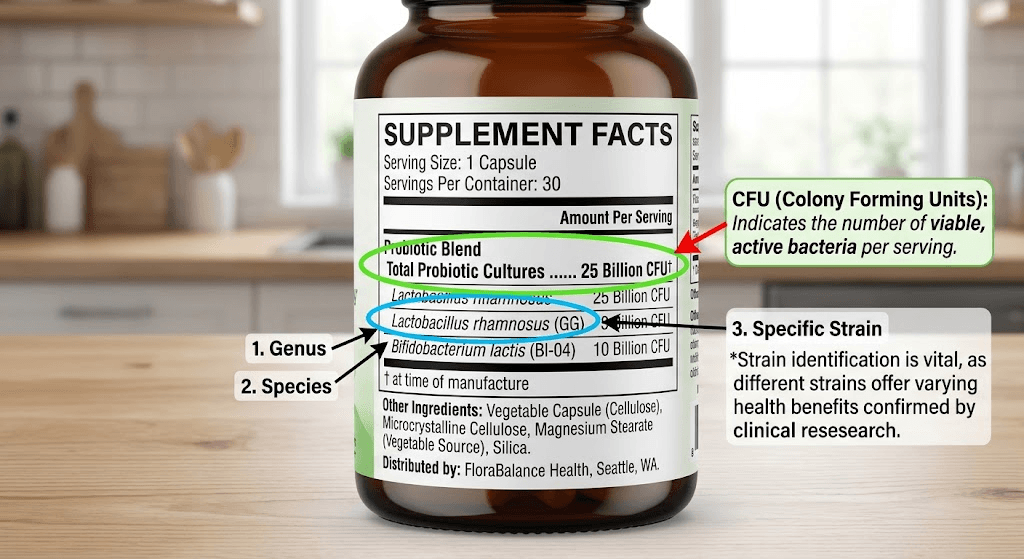
Probiotics are identified by their genus, species, and strain (e.g., Lactobacillus acidophilus DDS-1).
- Lactobacillus: Often used to support dairy digestion and general immune health. Common species include L. acidophilus and L. rhamnosus.
- Bifidobacterium: Typically live in the large intestine and are heavily involved in producing short-chain fatty acids. Common species include B. bifidum and B. lactis.
- Saccharomyces boulardii: Interestingly, this is not a bacterium but a beneficial yeast, often studied for its ability to help manage temporary diarrhea associated with antibiotic use.
Common Postbiotics
- Sodium Butyrate (or Butyric Acid): A primary short-chain fatty acid that serves as the main energy source for the cells lining the colon.
- Inactivated bacteria (heat-killed probiotics): Some supplements use dead probiotic cells, which research suggests may still offer immune-supporting benefits.
What Does the Evidence Show?
The scientific research surrounding the microbiome is vast, but it is important to separate what has been proven in humans from what has only been seen in laboratories.
Strong Evidence: Research clearly shows that certain probiotic strains can help manage specific conditions. For example, clinical guidelines often support the use of specific probiotics (like Saccharomyces boulardii or Lactobacillus rhamnosus GG) to reduce the risk of diarrhea caused by taking antibiotics.
Mixed Evidence: For general digestive wellness—like reducing daily bloating or improving general bowel regularity in healthy people—the evidence is mixed. Some human trials show positive results from both prebiotics and probiotics, while others show no significant difference compared to a placebo. The effectiveness often depends entirely on the specific strain used and the individual’s baseline gut health.
Limited Evidence: Postbiotic supplements are the newest category. While lab and animal studies strongly suggest that compounds like butyrate promote colon health and reduce inflammation, widespread, long-term human clinical trials on oral postbiotic supplements are still limited. Much of the current understanding comes from studying how these compounds act when produced naturally inside the body, rather than when taken as a pill.
Risks and Side Effects
While generally considered safe for healthy adults, these supplements can cause mild, temporary side effects.
When starting a prebiotic or probiotic, it is very common to experience an initial increase in gas, bloating, and mild stomach discomfort. This happens as the gut environment shifts and bacteria ferment the new fibers. These symptoms usually subside within a few days to a week.
A notable risk with multi-ingredient supplements is the use of “proprietary blends.” This is when a company lists several strains or fibers together under one total weight, masking exactly how much of each specific ingredient is actually in the product. This makes it difficult to know if you are getting an effective dose of the active ingredients.
Who Should Be Especially Careful?
Not everyone should take probiotic supplements without medical supervision. The following groups should be particularly cautious:
- Immunocompromised individuals: People undergoing chemotherapy, recovering from organ transplants, or living with HIV should avoid live probiotics unless directed by a doctor, as there is a small risk that the live bacteria could cause an infection.
- People with severe bowel diseases: Those with active ulcerative colitis, Crohn’s disease, or short bowel syndrome should consult their gastroenterologist before introducing new fibers or live bacteria.
- Small Intestinal Bacterial Overgrowth (SIBO): For people with SIBO, adding prebiotics or certain probiotics can sometimes make symptoms worse by feeding bacteria that are growing in the wrong part of the digestive tract.
When to Speak With a Healthcare Professional
You should not rely on over-the-counter supplements to treat serious digestive symptoms. Make an appointment with a healthcare professional if you experience:
- Unexplained weight loss
- Severe or persistent abdominal pain
- Blood in your stool or dark, tarry stools
- Symptoms that interrupt your sleep or daily life
Always talk to your doctor before adding a new supplement to your routine, especially if you take daily prescription medications.
How to Evaluate a Supplement in This Category
If you and your doctor decide a supplement is right for you, use this checklist to evaluate products on the market:
- Check the CFUs: For probiotics, the dose is measured in Colony Forming Units (CFUs). Look for products that guarantee their CFU count through the expiration date, not just at the time of manufacture.
- Look for specific strains: A quality product will list the specific strain (a combination of letters and numbers after the species name), showing exactly what was tested in research.
- Third-party testing: Look for seals from independent organizations like NSF International, USP, or ConsumerLab, which verify that the product actually contains what the label claims and is free of harmful contaminants.
- Avoid exaggerated claims: Stay away from products that claim to “cure” digestive diseases, guarantee rapid weight loss, or promise to perfectly “detox” your system.
Related Product Analyses
Supplements Diary has examined several popular products in the digestive health space. If you want to see how manufacturers combine these ingredients in the real world, you can explore our detailed reviews:
- Read our PrimeBiome review for a look at a formula that focuses on combining probiotic strains with postbiotic compounds.
- Explore our Peak BioBoost review to understand how prebiotic fiber blends are formulated to support regular bowel movements.
- See our Integrative Digestive Formula review to learn how certain supplements combine microbiome support with digestive enzymes and botanical ingredients.
Frequently Asked Questions
Do I need to take prebiotics, probiotics, and postbiotics all at the same time?
No. In fact, if you eat a fiber-rich diet with plenty of vegetables, fruits, and whole grains, you are already consuming natural prebiotics. Many people find success by just focusing on diet, while others may benefit from targeting a specific issue with one type of supplement. Products that combine prebiotics and probiotics are often called “synbiotics.”
What is the best time of day to take a probiotic?
Recommendations vary by manufacturer, but many gastroenterologists suggest taking probiotics shortly before or with a meal that contains some fat. The food helps buffer stomach acid, allowing more of the live bacteria to survive the journey to your intestines.
Can I get these entirely from food?
Yes. You can get prebiotics from garlic, onions, bananas, oats, and apples. Probiotics are abundant in fermented foods like plain yogurt, kefir, unpasteurized sauerkraut, tempeh, and miso. If your gut is healthy, a varied diet is usually enough to produce all the natural postbiotics you need.
Do probiotics need to be refrigerated?
It depends on the specific strain. Some bacteria are highly sensitive to heat and require refrigeration to stay alive, while others are freeze-dried and shelf-stable. Always follow the storage instructions on the specific product label.
Conclusion
Prebiotics, probiotics, and postbiotics each play a distinct role in the complex ecosystem of human digestion. Prebiotics act as the necessary fuel, probiotics serve as the living workforce, and postbiotics are the resulting beneficial compounds that support overall health.
While supplements can be a helpful tool—particularly after a course of antibiotics or during periods of mild digestive distress—they are not a replacement for a balanced diet rich in natural fibers and fermented foods. Because scientific evidence is stronger for some specific uses than for general wellness, it is always best to maintain realistic expectations and consult with a healthcare professional to find the right approach for your individual digestive health.
References
- National Institutes of Health (NIH) Office of Dietary Supplements – Probiotics: Fact Sheet for Health Professionals – https://ods.od.nih.gov/factsheets/Probiotics-HealthProfessional/
- National Center for Complementary and Integrative Health (NCCIH) – Probiotics: What You Need To Know – https://www.nccih.nih.gov/health/probiotics-what-you-need-to-know
- Cleveland Clinic – Prebiotics vs. Probiotics: What’s the Difference? – https://my.clevelandclinic.org/health/articles/14598-probiotics
- Harvard T.H. Chan School of Public Health – The Microbiome – https://www.hsph.harvard.edu/nutritionsource/microbiome/

Dr. Emma Myers is a medical student at UNC School of Medicine in Chapel Hill, with a focus on autoimmune dermatology. She grew up in Durham, North Carolina, and completed her undergraduate studies at the University of Virginia, majoring in Human Biology and Spanish. Emma has worked as a medical assistant in dermatology, gaining experience in cosmetic and medical dermatology. She leads advocacy groups for autoimmune skin disorders and is involved in research on autoimmune diseases, skin safety, and early diagnosis. Outside of medicine, she is a certified yoga sculpt instructor and enjoys outdoor activities with her dog.