
Walking down the vitamin aisle of any pharmacy, you will likely see a massive selection of eye health products. Many of these bottles feature bright pictures of eyes, carrots, or magnifying glasses. However, if you look closely at the labels, you will notice that some are marked as “AREDS2” formulas, while others are simply labeled as general eye, vision, or macular support supplements.
Understanding the difference between an AREDS2 formula and an ordinary eye supplement is incredibly important for your vision health and your wallet. They are not the same thing, they are not designed for the same people, and they do not have the same level of scientific backing.
This guide will explain exactly what the AREDS2 formula is, how it compares to standard eye vitamins, what the scientific evidence actually says, and how to discuss these options safely with your eye doctor.
Quick Answer
The AREDS2 formula is a specific, exact blend of six nutrients (Vitamin C, Vitamin E, Zinc, Copper, Lutein, and Zeaxanthin) proven by a major National Institutes of Health study to slow the progression of specific stages of age-related macular degeneration (AMD). Ordinary eye supplements vary wildly in their ingredients, often contain lower doses, and lack large-scale clinical evidence proving they improve everyday vision, eye strain, or general eye health.
What Is AREDS2?
AREDS stands for the Age-Related Eye Disease Studies. These were major clinical trials sponsored by the National Eye Institute (NEI), which is part of the federal government’s National Institutes of Health.
The second study, known as AREDS2, was completed in 2013. The researchers wanted to see if a specific high-dose blend of vitamins and minerals could protect the macula—the part of the retina responsible for sharp, straight-ahead vision.
An authentic AREDS2 supplement is not a random mixture of healthy ingredients. It is an exact recipe. To be a true AREDS2 formula, a supplement must contain these specific daily doses:
- Vitamin C: 500 milligrams (mg)
- Vitamin E: 400 international units (IU)
- Lutein: 10 mg
- Zeaxanthin: 2 mg
- Zinc: 80 mg or 25 mg (as zinc oxide)
- Copper: 2 mg (as cupric oxide, to prevent copper deficiency caused by high zinc)
The AREDS2 formula is designed for one specific purpose: to help people who have intermediate age-related macular degeneration (AMD) in one or both eyes, or advanced AMD in one eye, lower their risk of the condition getting worse.
What Are Ordinary Eye Supplements?
Ordinary eye supplements make up the rest of the products on the shelf. Unlike AREDS2, these products do not follow a strict, government-tested recipe. Manufacturers can put whatever they want into these bottles, in whatever amounts they choose, as long as they follow basic dietary supplement regulations.
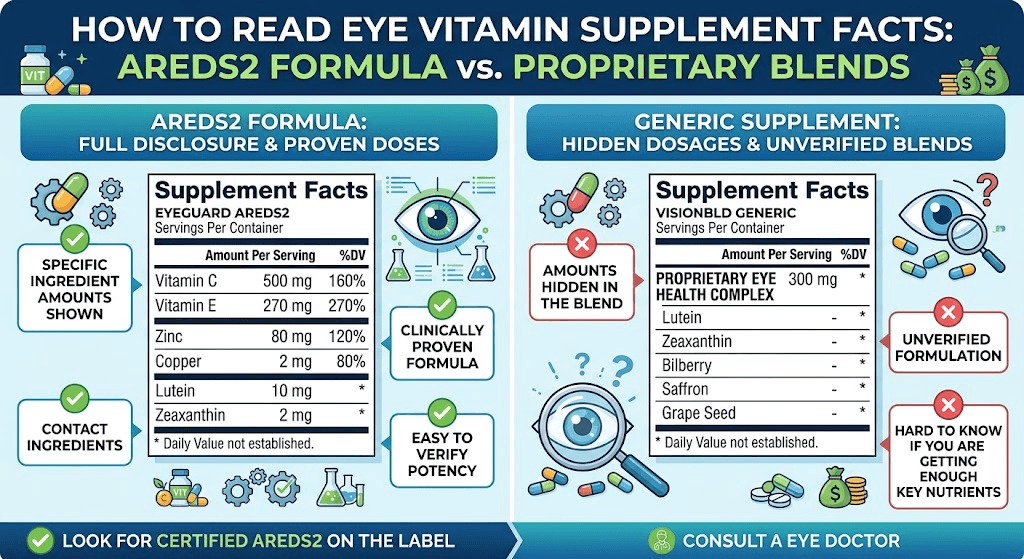
These products often contain smaller amounts of lutein and zeaxanthin. They may also include other ingredients that are historically associated with eye health, such as vitamin A (beta-carotene), bilberry extract, astaxanthin, omega-3 fatty acids, ginkgo biloba, or grape seed extract.
Ordinary eye supplements are usually marketed to the general public. You might see them advertised to help with digital eye strain, blue light protection, dry eyes, or night vision. While these products might contain healthy antioxidants, they do not have the same rigorous, large-scale clinical proof behind them as the AREDS2 formula.
Common Causes or Contributing Factors to Eye Concerns
As we get older, changes in our vision are common. Understanding what causes these changes can help explain why certain nutrients are studied for eye health. Keep in mind that only an eye doctor can diagnose the specific cause of your vision changes.
- Aging: The tissues in the eye naturally degrade over time. The macula, which processes clear central vision, can thin or develop small deposits called drusen.
- Oxidative Stress: The eyes are constantly exposed to light and oxygen, which creates free radicals. Over time, these unstable molecules can damage the cells in the retina.
- Genetics: Family history plays a significant role in eye conditions, particularly in how the macula ages over time.
- Lifestyle Factors: Smoking is one of the biggest risk factors for macular decline. A diet lacking in leafy greens and healthy fats can also deprive the eyes of necessary nutrients.
- Environmental Exposure: Prolonged exposure to ultraviolet (UV) rays from the sun without proper sunglasses can damage the retina over the years.
Common Signs or Symptoms
Changes in your eye health can happen slowly, often without you noticing at first. Common signs that something may be changing in your eyes include:
- Needing more light to read or do close work.
- Straight lines appearing wavy or bent.
- A gradual increase in the blurriness of printed words.
- Difficulty adjusting from bright to low-light settings.
- A dark, blurry, or empty spot appearing in the center of your vision.
Symptoms alone cannot confirm a diagnosis. If you experience any of these signs, particularly wavy lines or dark spots, you should schedule a comprehensive dilated eye exam with an optometrist or ophthalmologist.
How the Relevant Supplements Are Supposed to Work
The ingredients found in eye supplements are generally classified as antioxidants. The theory is that these nutrients travel through the bloodstream and accumulate in the tissues of the eye, particularly the retina and the macula.
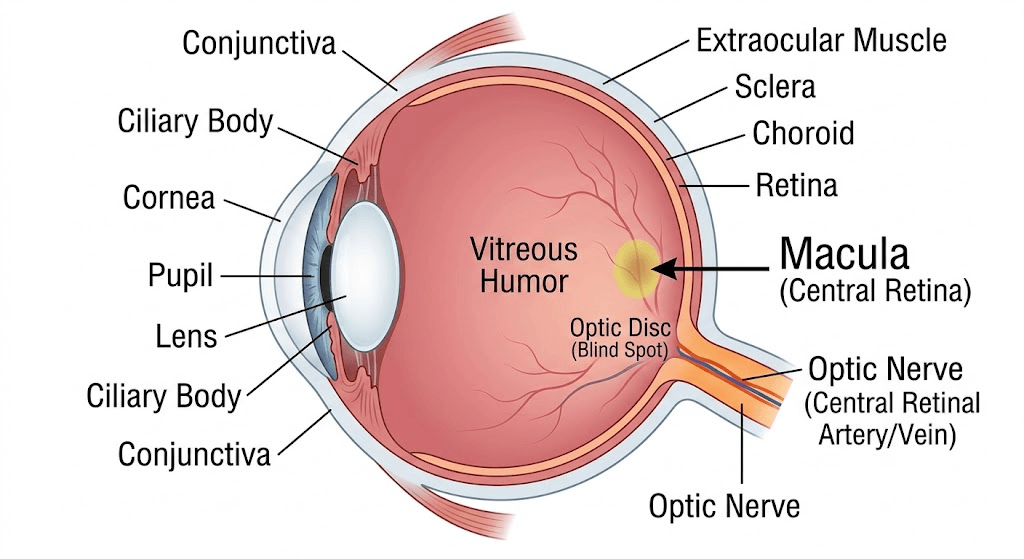
Once there, they are supposed to act like internal sunglasses. Lutein and zeaxanthin, for example, naturally form the macular pigment. This pigment helps absorb harmful light (like ultraviolet and blue light) before it can damage the sensitive photoreceptor cells at the back of the eye.
The high doses of vitamins C and E, along with zinc, are thought to neutralize free radicals, reducing the oxidative stress that contributes to cellular damage in the eye.
Common Ingredients
Whether you are looking at an AREDS2 formula or an ordinary eye supplement, you will likely see overlapping ingredients. Here is what they are and why they are used.

Lutein and Zeaxanthin
These are carotenoids, which are natural pigments found in leafy green vegetables like spinach and kale. They are the most common ingredients in eye supplements. Research suggests they help build up the protective pigment in the macula. In the AREDS2 study, lutein and zeaxanthin were shown to be safe and effective replacements for beta-carotene.
Zinc
Zinc is a trace mineral found in high concentrations in the eye. It plays a role in bringing vitamin A from the liver to the retina to produce melanin, a protective pigment. The AREDS2 formula uses a high dose of zinc (up to 80 mg). Because zinc can interfere with the body’s ability to absorb copper, an AREDS2 supplement must always include copper to prevent a deficiency.
Vitamin C and Vitamin E
These are powerful antioxidants. They are included in eye supplements to help protect the eye’s cells from damage caused by free radicals. The doses used in the AREDS2 formula are significantly higher than the standard recommended daily allowance.
Bilberry Extract
Bilberry is a berry closely related to the blueberry. It is very common in ordinary eye supplements but is not part of the AREDS2 formula. It contains anthocyanins, which are antioxidants. While it has been studied for its potential to support night vision, results have been mixed, and large-scale human trials are lacking.
Omega-3 Fatty Acids
Omega-3s (EPA and DHA) are found in fish oil. They are important for the structural integrity of the retina. Interestingly, the AREDS2 trial actually tested omega-3s to see if they helped slow macular decline. The study concluded that adding omega-3s to the formula did not provide any additional benefit for AMD. Some doctors still recommend omega-3s for dry eye symptoms, though recent studies on that specific use have shown mixed results.
What Does the Evidence Show?
When comparing AREDS2 to ordinary eye supplements, the level of evidence is the most significant difference.
Strong Evidence (AREDS2 for specific AMD): The evidence supporting the exact AREDS2 formula is exceptionally strong, backed by decades of data from the National Eye Institute. However, the evidence is highly specific. It proves that the AREDS2 formula can reduce the risk of intermediate AMD progressing to advanced AMD by about 25%.
Insufficient Evidence (AREDS2 for general prevention): There is no reliable evidence that taking the AREDS2 formula will prevent you from developing AMD in the first place if you have healthy eyes. It also does not cure AMD, nor does it restore vision that has already been lost.
Mixed to Limited Evidence (Ordinary Eye Supplements): For ordinary, over-the-counter eye supplements marketed for everyday vision support, the evidence is largely mixed. While the individual ingredients (like lutein) are important for health, there is no conclusive human evidence showing that a healthy person taking a low-dose eye vitamin will experience sharper vision, less eye strain, or improved eye health.
Risks and Side Effects
Vitamins and minerals are not harmless simply because you can buy them without a prescription. High-dose supplements can have real side effects.
- Zinc Toxicity and Upset Stomach: The high dose of zinc in the AREDS2 formula can cause stomach upset, nausea, and changes in taste. Taking the supplement with food can sometimes help. As mentioned, high zinc can also cause copper deficiency, which is why copper is included in the formula.
- Vitamin E Risks: High doses of vitamin E can act as a mild blood thinner. This can be a concern for people taking anticoagulant medications.
- Beta-Carotene and Smokers: The original AREDS1 formula used beta-carotene. Researchers later discovered that high doses of beta-carotene increased the risk of lung cancer in people who smoke or used to smoke. The AREDS2 formula replaced beta-carotene with lutein and zeaxanthin to solve this problem. However, some ordinary eye supplements still use beta-carotene (vitamin A), so smokers should read labels carefully.
- Interactions: High-dose antioxidants can sometimes interfere with the way the body processes other medications. Always check our guide to supplement interactions before starting a new routine.
Who Should Be Especially Careful?
Certain groups need to be particularly cautious when considering eye supplements:
- Current or Former Smokers: Must avoid any eye supplement containing high doses of beta-carotene (Vitamin A) due to the increased risk of lung cancer.
- People on Blood Thinners: Should discuss the high vitamin E content in AREDS2 with their cardiologist or primary care doctor.
- People with Healthy Eyes: Taking the high-dose AREDS2 formula is generally not recommended for people with normal vision or early-stage AMD, as the risks (like stomach upset) may outweigh the lack of proven preventative benefits.
- People Taking Daily Multivitamins: If you take a multivitamin alongside an AREDS2 supplement, you may be getting excessive amounts of zinc and vitamin E.
When to Speak With a Healthcare Professional
You should never try to treat a vision problem on your own. If you are experiencing changes in your sight, you need an eye exam. Seek urgent medical care from an eye specialist if you experience:
- A sudden loss of vision in one or both eyes.
- Sudden pain in your eye.
- Flashes of light or a sudden increase in floating spots (floaters) across your vision.
- A shadow or curtain appearing to fall over part of your vision.
How to Evaluate a Supplement in This Category
If your eye doctor recommends a supplement, use this checklist to evaluate your options:
- Check for the Exact AREDS2 Match: If your doctor told you to take an AREDS2 supplement, look at the “Supplement Facts” panel. The ingredients and doses should match the NEI recipe exactly (Vitamin C 500mg, Vitamin E 400 IU, Lutein 10mg, Zeaxanthin 2mg, Zinc 25mg-80mg, Copper 2mg).
- Avoid Proprietary Blends: If you are buying an ordinary eye supplement, avoid products that hide their ingredient amounts behind “proprietary blends” or “complexes.” You have a right to know exactly how much of each ingredient you are swallowing.
- Look for Third-Party Testing: Choose brands that are tested by independent organizations like USP, NSF International, or ConsumerLab. This ensures the bottle actually contains what the label claims.
- Ignore Exaggerated Claims: No supplement can restore lost vision, cure eye diseases, or guarantee perfect eyesight. If a label makes aggressive promises, put it back on the shelf.
Related Product Analyses
If you are exploring sensory and nerve health, Supplements Diary has also examined several specific products currently on the market. These reviews look closely at the ingredient labels and marketing claims of various formulas:
- Our review of Sight Fresh examines its specific ingredient profile and how it compares to standard industry expectations.
- Our analysis of iGenics breaks down the botanical ingredients used in the formula and reviews the available scientific literature.
- We have also evaluated TheyaVue, looking at the blend of antioxidants it utilizes to support its claims.
Frequently Asked Questions
Can I take an AREDS2 supplement just to prevent eye problems?
There is no clinical evidence showing that taking an AREDS2 supplement will prevent eye disease from developing if your eyes are currently healthy. The National Eye Institute specifically states that the formula has only been proven to help those who already have intermediate to advanced AMD.
Does AREDS2 restore vision that has already been lost?
No. The AREDS2 formula is designed to slow down the progression of macular changes. It cannot reverse damage that has already occurred or bring back vision that has been lost.
What is the difference between AREDS1 and AREDS2?
The primary difference is that the original AREDS formula used beta-carotene. Because beta-carotene was found to increase lung cancer risk in smokers, the AREDS2 formula replaced it with lutein and zeaxanthin. AREDS2 also tested removing omega-3s (which showed no benefit) and lowering the zinc dose (which proved just as effective with fewer side effects).
Can I take a regular daily multivitamin with my eye supplement?
This requires a conversation with your doctor. Most AREDS2 supplements contain very high doses of certain vitamins. If you take a standard multivitamin on top of it, you might exceed the safe upper limits for zinc or vitamin E. Your doctor can help you adjust your daily intake safely.
Why do ordinary eye supplements use different ingredients?
Because they are not trying to replicate the National Eye Institute’s study. Ordinary supplements are often formulated to appeal to general consumers seeking natural antioxidants. While ingredients like bilberry or ginkgo biloba have traditional uses, they do not have the same rigorous clinical backing for slowing specific eye conditions as the AREDS2 formula.
Conclusion
The difference between an AREDS2 formula and ordinary eye supplements comes down to precise scientific testing. AREDS2 is an exact, high-dose combination of specific nutrients proven by the federal government to slow the progression of a specific eye condition. Ordinary eye supplements are general blends of antioxidants that may support overall nutrition but lack strong clinical proof for everyday vision enhancement.
Always remember that no supplement can cure an eye disease, reverse vision loss, or replace regular visits to an eye care professional. Before adding any new eye vitamin to your daily routine—especially high-dose formulas like AREDS2—speak with your optometrist or ophthalmologist to ensure it is the right and safe choice for your specific vision needs.
References
- National Eye Institute – Age-Related Eye Disease Studies (AREDS/AREDS2) – https://www.nei.nih.gov/research/clinical-trials/age-related-eye-disease-studies-aredsareds2
- National Institutes of Health Office of Dietary Supplements – Vitamin A and Carotenoids Fact Sheet for Health Professionals – https://ods.od.nih.gov/factsheets/VitaminA-HealthProfessional/
- American Academy of Ophthalmology – What Are the AREDS2 Supplements for AMD? – https://www.aao.org/eye-health/diseases/what-are-areds2-supplements-amd
- National Institutes of Health Office of Dietary Supplements – Zinc Fact Sheet for Health Professionals – https://ods.od.nih.gov/factsheets/Zinc-HealthProfessional/
- MedlinePlus – Macular Degeneration – https://medlineplus.gov/maculardegeneration.html

Dr. Emma Myers is a medical student at UNC School of Medicine in Chapel Hill, with a focus on autoimmune dermatology. She grew up in Durham, North Carolina, and completed her undergraduate studies at the University of Virginia, majoring in Human Biology and Spanish. Emma has worked as a medical assistant in dermatology, gaining experience in cosmetic and medical dermatology. She leads advocacy groups for autoimmune skin disorders and is involved in research on autoimmune diseases, skin safety, and early diagnosis. Outside of medicine, she is a certified yoga sculpt instructor and enjoys outdoor activities with her dog.