
If you have been looking into natural ways to support your prostate, you have almost certainly come across saw palmetto. It is one of the most popular herbal supplements marketed to men, especially those dealing with frequent nighttime urination or a weak urinary stream. But with so many products on the market making bold claims, it can be difficult to separate marketing from scientific reality.
This article explores what saw palmetto is, how it is thought to affect the body, and what clinical studies actually say about its effectiveness. We will also discuss potential side effects, interactions with medications, and how to safely evaluate dietary supplements in this category. Our goal is to provide you with clear, balanced information so you can make informed decisions alongside your doctor.
Quick Answer
Saw palmetto is a plant extract widely used in supplements for prostate health. While early studies suggested it might help reduce urinary symptoms associated with an enlarged prostate, more recent, high-quality human trials—including a major Cochrane review—have found that saw palmetto is generally no more effective than a placebo for relieving these symptoms. Always consult a doctor before starting saw palmetto to ensure your symptoms are not caused by a more serious medical condition.
What Is Saw Palmetto?
Saw palmetto (Serenoa repens) is a small palm tree native to the southeastern United States, particularly Florida. For hundreds of years, Native Americans used the berries of this plant for various medicinal purposes and as a food source.
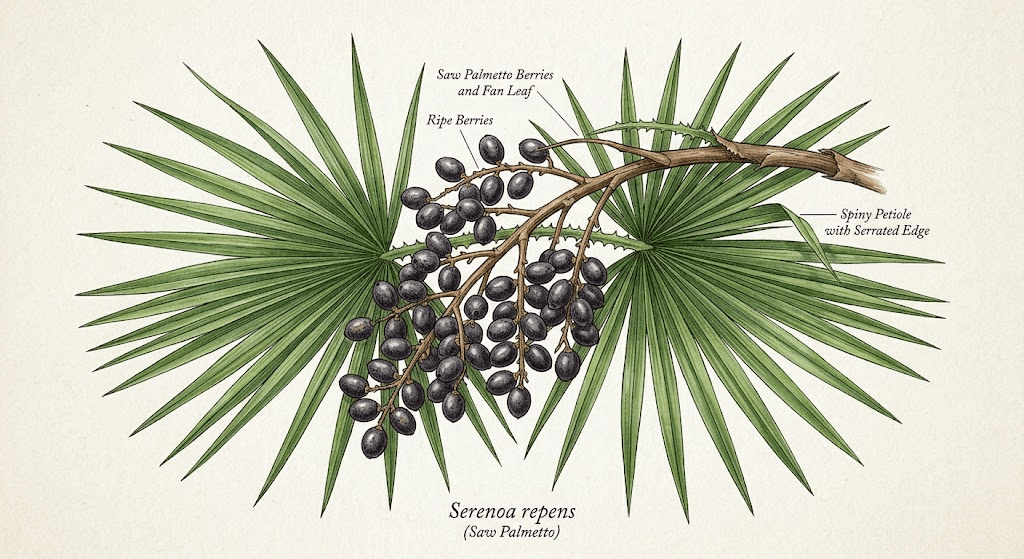
Today, the ripe berries are harvested, dried, and processed to create an extract. This extract is rich in fatty acids and plant sterols. You will typically find saw palmetto sold as capsules, tablets, liquid tinctures, or teas, often marketed specifically toward aging men looking to support normal prostate function and urinary flow.
Common Causes or Contributing Factors to Prostate Changes
As men age, the prostate gland naturally undergoes changes. The most common condition associated with these changes is Benign Prostatic Hyperplasia (BPH), which is a non-cancerous enlargement of the prostate.
While the exact cause of BPH is not entirely understood, medical experts believe it is strongly linked to aging and normal hormonal changes. Specifically, the conversion of testosterone into another hormone called dihydrotestosterone (DHT) plays a significant role in prostate growth. Family history and lifestyle factors, such as diet and physical activity levels, may also influence prostate health over time.
It is important to note that an enlarged prostate is a normal part of aging for many men and does not increase the risk of developing prostate cancer, though the two conditions can share similar symptoms.
Common Signs or Symptoms
When the prostate enlarges, it can press against the urethra (the tube that carries urine out of the body). This pressure can lead to lower urinary tract symptoms. Men experiencing these changes often notice:

- A frequent or urgent need to urinate
- Waking up multiple times during the night to urinate (nocturia)
- Difficulty starting a urine stream
- A weak or interrupted urinary stream
- Dribbling at the end of urination
- A feeling that the bladder is not completely empty
Note: These symptoms can also be signs of other, more serious medical conditions. Experiencing these signs does not automatically mean you have BPH. A proper medical evaluation is necessary for an accurate diagnosis.
How Saw Palmetto Is Supposed to Work
The exact mechanism of how saw palmetto might interact with the body is still being studied, but researchers have a few primary theories.
Many scientists have investigated whether saw palmetto extract acts as a 5-alpha-reductase inhibitor. This means it might help block the enzyme that converts testosterone into DHT, the hormone responsible for prostate tissue growth. Prescription medications for BPH often work by heavily blocking this exact enzyme.
Additionally, some laboratory studies suggest that saw palmetto might have anti-inflammatory properties that could help reduce swelling in the prostate tissue. While these mechanisms make sense in theory and in test-tube environments, the way they translate to actual symptom relief in the human body has shown mixed results.
Common Ingredients Paired with Saw Palmetto
When you look at a prostate health supplement, saw palmetto is rarely the only ingredient on the label. Formulators often combine it with other plant extracts, vitamins, and minerals that are also studied for men’s health. You can learn more about these in our broader look at common ingredients used in men’s health products. Some frequently paired ingredients include:
- Beta-sitosterol: A plant substance similar to cholesterol that has been studied for its potential to improve urinary symptoms.
- Pygeum africanum: An extract from the bark of the African plum tree, often used in Europe for urinary symptoms.
- Stinging Nettle Root: Sometimes combined with saw palmetto in studies to see if the two herbs work better together.
- Zinc: An essential mineral; the prostate gland typically contains a high concentration of zinc.
- Lycopene: An antioxidant found in tomatoes that is frequently studied for its general prostate-protective properties.
What Does the Evidence Show?
When evaluating any supplement, it is necessary to look at what rigorous scientific studies have discovered, rather than relying on manufacturer claims.
Strong to Mixed Evidence in Early Studies
In the 1990s and early 2000s, several studies and reviews suggested that saw palmetto was effective at reducing the symptoms of an enlarged prostate. Many of these studies noted improved urine flow and less frequent nighttime urination. However, scientists later pointed out that many of these early trials were small, lasted only a few weeks, and did not properly compare the supplement to a placebo.
High-Quality Human Trials and Current Consensus
As research methods improved, the results shifted. A landmark 2012 Cochrane review—one of the most respected organizations for evaluating medical evidence—analyzed data from 32 trials involving over 5,000 men. The review concluded that saw palmetto, even at double and triple doses, did not improve lower urinary tract symptoms or peak urine flow any better than a placebo.
Furthermore, the National Center for Complementary and Integrative Health (NCCIH) states that saw palmetto does not appear to affect the size of the prostate or the levels of prostate-specific antigen (PSA) in the blood.
While some men report personal success when taking saw palmetto, the highest level of current scientific evidence indicates it is not a proven treatment for BPH or its urinary symptoms.
Risks and Side Effects
Saw palmetto is generally considered safe for most healthy adults when used as directed. However, like any active compound, it can cause side effects.
Reported side effects include:
- Mild stomach upset or nausea
- Headache
- Fatigue
- Dizziness
- Constipation or diarrhea
Because saw palmetto may influence hormone levels, there is a theoretical risk that it could interact with hormone-related medications. Furthermore, saw palmetto may slow blood clotting. If you are taking blood thinners (such as warfarin or aspirin) or are scheduled for surgery, taking saw palmetto could increase your risk of bleeding.
Another risk stems from the supplement industry itself. Dietary supplements are not strictly regulated by the FDA in the same way medications are. Some products contain “proprietary blends” where the exact amount of saw palmetto is hidden. Others may be adulterated or contain far less of the active ingredient than the label claims.
Who Should Be Especially Careful?
Certain groups should exercise extra caution or avoid saw palmetto entirely:
- Men on prescription medications: Especially those taking blood thinners, hormone therapies, or prescription BPH medications. Combining a supplement with a prescription drug can lead to unpredictable interactions.
- People undergoing surgery: Because of the potential bleeding risk, you should stop taking saw palmetto at least two weeks before any scheduled surgery.
- Women and children: Saw palmetto is generally not recommended for pregnant or nursing women, or children, due to its potential effects on hormones.
When to Speak With a Healthcare Professional
You should never use dietary supplements to self-treat urinary symptoms without first seeing a doctor. Urinary difficulties can be a sign of BPH, but they can also indicate a urinary tract infection, bladder stones, or prostate cancer.
Seek immediate medical attention if you experience:
- A complete inability to urinate
- Pain or burning during urination
- Blood in your urine or semen
- Severe lower back, pelvic, or upper thigh pain
Before trying a new product, we highly recommend reading our guide to evaluating supplement safety and discussing your options with a primary care physician or a urologist.
How to Evaluate a Supplement in This Category
If you and your doctor decide that trying a saw palmetto supplement is appropriate for you, use this checklist to find a higher-quality product:
- Check the extraction method: Look for standardized extracts. A label stating the product contains “85% to 95% fatty acids and sterols” indicates it matches the type of extract typically used in clinical studies.
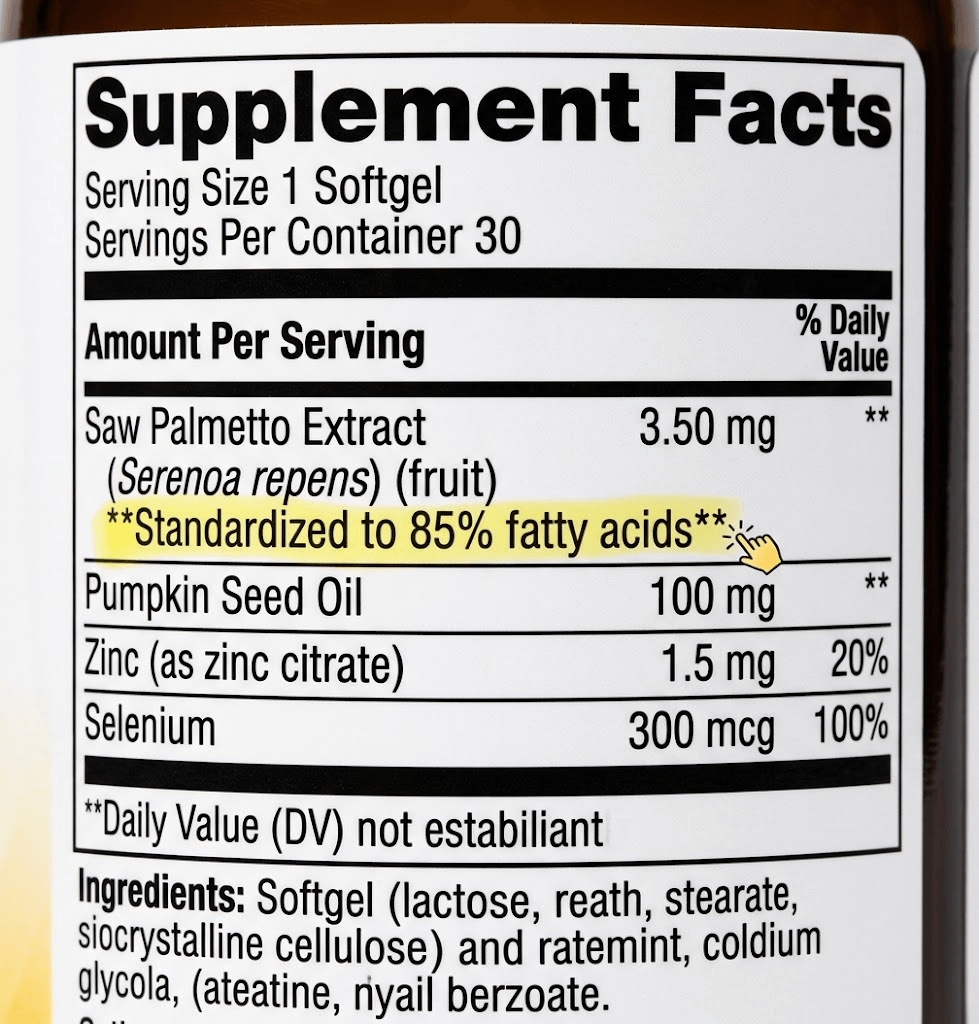
- Avoid proprietary blends: Choose products that clearly list the exact milligram amount of saw palmetto per serving.
- Look for third-party testing: Seals from independent organizations like NSF International, USP, or ConsumerLab indicate the product has been tested for purity and actually contains what is on the label.
- Beware of exaggerated claims: Avoid products that claim to “cure” prostate problems, “shrink” the prostate overnight, or guarantee specific medical outcomes.
Related Product Analyses
Supplements Diary has also examined several products currently marketed to men for urinary and prostate support. If you are researching specific brands that utilize saw palmetto or similar botanical blends, you can read our detailed breakdowns of their formulas and marketing claims here:
- Read our detailed analysis of Prostadine, a liquid formula that incorporates several herbal ingredients.
- See our review of Prostate 911 for an examination of a traditional capsule supplement highlighting saw palmetto.
- Learn more by taking a closer look at FlowForce Max, which uses a chewable delivery method for its botanical blend.
- Check out our examination of ProstaLite for an overview of another popular option in this category.
Frequently Asked Questions
Does saw palmetto shrink an enlarged prostate?
According to the National Institutes of Health, current high-quality studies show that saw palmetto does not reduce the overall size of an enlarged prostate. Prescription medications prescribed by a doctor are typically required to physically shrink prostate tissue.
Can saw palmetto lower my PSA levels?
Research indicates that saw palmetto does not significantly affect prostate-specific antigen (PSA) levels. This is important because it means taking the supplement is unlikely to mask the results of a routine PSA blood test used to screen for prostate cancer.
How long does it take for saw palmetto to work?
In studies where patients did report subjective improvements, it generally took 4 to 8 weeks of consistent daily use to notice changes. However, as noted earlier, large-scale studies show the effects are often indistinguishable from a placebo.
Is it safe to take saw palmetto every day?
For most healthy men, daily use of saw palmetto is generally recognized as safe for up to three years. However, long-term safety data beyond that timeframe is limited. Always keep your doctor informed about any daily supplements you take.
Conclusion
Saw palmetto remains one of the most widely recognized natural ingredients for men’s health. While it has a long history of traditional use and early studies offered promising results, the most rigorous modern scientific evidence suggests that saw palmetto does not reliably relieve the urinary symptoms of an enlarged prostate any better than a placebo.
That being said, saw palmetto is generally considered safe for most healthy adults. If you are experiencing changes in your urinary habits, the most important first step is a proper medical diagnosis. Work with your healthcare provider to rule out serious conditions before spending money on supplements, and always prioritize transparency and third-party testing if you choose to add an herbal product to your routine.
References
- National Center for Complementary and Integrative Health (NCCIH) – Saw Palmetto – https://www.nccih.nih.gov/health/saw-palmetto
- National Institutes of Health (NIH) Office of Dietary Supplements – Dietary Supplements for Older Adults – https://ods.od.nih.gov/factsheets/olderadults-HealthProfessional/
- Cochrane Database of Systematic Reviews – Serenoa repens for benign prostatic hyperplasia – https://www.cochranelibrary.com/cdsr/doi/10.1002/14651858.CD001423.pub3/full
- MedlinePlus – Benign Prostatic Hyperplasia (BPH) – https://medlineplus.gov/enlargedprostatebph.html

Dr. Emma Myers is a medical student at UNC School of Medicine in Chapel Hill, with a focus on autoimmune dermatology. She grew up in Durham, North Carolina, and completed her undergraduate studies at the University of Virginia, majoring in Human Biology and Spanish. Emma has worked as a medical assistant in dermatology, gaining experience in cosmetic and medical dermatology. She leads advocacy groups for autoimmune skin disorders and is involved in research on autoimmune diseases, skin safety, and early diagnosis. Outside of medicine, she is a certified yoga sculpt instructor and enjoys outdoor activities with her dog.