
Many adults occasionally forget a name, misplace their keys, or struggle to concentrate during a busy afternoon. Because these experiences are so common, the market for memory and focus supplements has grown significantly. These products often claim to support mental clarity, protect brain cells, or improve attention span.
However, looking at the back of a supplement bottle can be confusing. The labels are often packed with long lists of herbal extracts, vitamins, and specialized compounds. This article explores the most common ingredients found in memory and focus supplements. We will examine what these ingredients are, what current research says about their effectiveness, and the safety concerns you should keep in mind. We will also discuss how to review and evaluate these formulas before adding them to your routine.
Quick Answer
Most memory and focus supplements contain ingredients like Bacopa monnieri, Ginkgo biloba, omega-3 fatty acids, phosphatidylserine, and B-vitamins. While some of these ingredients have shown mild cognitive benefits in certain studies, results are often mixed. Supplements cannot cure memory loss or treat medical conditions like Alzheimer’s disease. Always talk to your doctor before starting a new brain health supplement to avoid medication interactions.
What Are Memory and Focus Supplements?
Memory and focus supplements, sometimes called nootropics or cognitive enhancers, are dietary products designed to support brain function. They come in pills, powders, or gummies. Rather than treating a specific disease, these products are marketed to healthy individuals looking to maintain their mental sharpness, or to older adults hoping to support their memory as they age.

These products usually combine vitamins, minerals, amino acids, and botanical extracts. For more foundational information on how to support your nervous system, you can read our overview of brain and nerve health.
Common Causes or Contributing Factors to Memory and Focus Issues
Occasional memory slips and lack of focus are normal parts of life. Several everyday factors can make it harder for your brain to perform at its best:
- Poor sleep: Lack of restful sleep prevents the brain from properly storing memories and resting.
- Stress and anxiety: High levels of stress hormones can interfere with concentration and memory recall.
- Nutrient deficiencies: A lack of essential vitamins, like B12, can directly affect how your brain functions.
- Dehydration: Even mild dehydration can cause temporary brain fog and difficulty concentrating.
- Medication side effects: Certain prescription and over-the-counter drugs can cause drowsiness or confusion.
- Normal aging: Mild changes in memory speed are a normal part of getting older.
Common Signs or Symptoms
When people look for cognitive support, they are usually experiencing mild, non-medical symptoms such as:
- Occasionally forgetting where they placed everyday items.
- Trouble paying attention during long meetings or tasks.
- Walking into a room and forgetting why they went there.
- Experiencing a mid-afternoon slump in mental energy.
Note: If memory loss begins to interfere with your daily life, your ability to manage finances, or your personal safety, these are not just signs of everyday brain fog. They require professional medical evaluation.
How the Relevant Supplements Are Supposed to Work
Manufacturers claim that memory and focus supplements work through several different pathways in the body. Depending on the ingredients, these products are supposed to:
- Support blood flow: Some ingredients are believed to help widen blood vessels, allowing more oxygen and nutrients to reach the brain.
- Protect against oxidative stress: Many herbs are rich in antioxidants, which are studied for their potential to protect brain cells from age-related damage.
- Support neurotransmitters: Certain compounds may provide the building blocks for brain chemicals (like acetylcholine or dopamine) that help nerves communicate.
It is important to remember that these mechanisms are often studied in a laboratory setting. Taking a pill does not guarantee these specific effects will occur strongly enough to change how you feel or think.
Common Ingredients
Here is a breakdown of the most frequently used ingredients in memory and focus supplements.
Ginkgo Biloba
- What it is: An extract from the leaves of the Ginkgo tree, one of the oldest living tree species.
- Why it’s included: It is traditionally used to support blood circulation to the brain.
- What research suggests: Some studies have investigated whether Ginkgo may influence memory in older adults. However, major, large-scale studies (like the Ginkgo Evaluation of Memory study) found that it did not prevent cognitive decline.
- Safety and interactions: Ginkgo can increase the risk of bleeding. It can interact dangerously with blood thinners like warfarin, as well as certain antidepressants.

Bacopa Monnieri
- What it is: A creeping marsh plant used for centuries in traditional Ayurvedic medicine.
- Why it’s included: It is often marketed to support memory retention and speed of information processing.
- What research suggests: Several studies suggest Bacopa may support memory formation, but the effects are not immediate. It often takes four to twelve weeks of daily use to see potential changes in studies.
- Safety and interactions: It is generally considered safe for most adults but can cause stomach cramps, nausea, or increased bowel movements.
Phosphatidylserine
- What it is: A type of fat compound (phospholipid) that naturally makes up a large portion of brain cell membranes.
- Why it’s included: It is included to support healthy cell structures and nerve communication.
- What research suggests: Early studies used phosphatidylserine derived from cow brains and showed some promise for memory support. Today, supplements use plant-based sources (like soy or cabbage). The FDA allows a very qualified health claim for this ingredient, noting that while it may reduce the risk of cognitive dysfunction in the elderly, the evidence is very limited and not conclusive.
- Safety and interactions: Usually well-tolerated, but can cause insomnia or stomach upset at higher doses.
Huperzine A
- What it is: A compound extracted from Chinese club moss (Huperzia serrata).
- Why it’s included: It is believed to act as an acetylcholinesterase inhibitor. This means it may stop an enzyme from breaking down acetylcholine, a learning neurotransmitter.
- What research suggests: While it has been studied for cognitive support, long-term safety data is lacking.
- Safety and interactions: Because it affects brain chemicals similarly to some Alzheimer’s drugs, it can cause sweating, blurred vision, slurred speech, and muscle twitching. It should not be combined with neurological medications.
L-Theanine and Caffeine
- What they are: Caffeine is a well-known stimulant. L-theanine is an amino acid naturally found in green tea leaves.
- Why they are included: They are often paired together. Caffeine provides alertness, while L-theanine is thought to promote a calm focus, smoothing out the “jitters” often caused by caffeine alone.
- What research suggests: The combination has been shown in human trials to temporarily improve focus and attention during demanding tasks.
- Safety and interactions: High amounts of caffeine can cause heart palpitations, anxiety, and sleep disruption.
Lion’s Mane Mushroom Extract
- What it is: An edible mushroom known for its shaggy, hair-like appearance.
- Why it’s included: It is marketed to stimulate the growth of new brain cells.
- What research suggests: Most studies have been conducted on animals or in test tubes. Currently, there is no reliable human research to support this ingredient for significantly improving memory or nerve growth in healthy adults.
- Safety and interactions: Generally safe as a food, but long-term supplement safety is not well documented.
Some formulas combine several of these ingredients along with more obscure botanical extracts. For example, you can see how multi-ingredient profiles are constructed in our review of Synaptigen or our PinealX breakdown.
What Does the Evidence Show?
When evaluating the evidence for memory and focus ingredients, it helps to group them by the strength of the available science:
- Strong Evidence (for temporary focus): Caffeine, especially when paired with L-theanine, has strong evidence for improving short-term attention and alertness.
- Mixed or Limited Evidence: Bacopa monnieri, Ginkgo biloba, and Phosphatidylserine have some human studies showing mild benefits, but other studies show no effect at all. Results vary widely from person to person.
- Insufficient Evidence: Many herbal blends and specialty mushroom extracts lack large, peer-reviewed human trials. They rely mostly on animal testing or historical use.
Remember that animal studies (testing on mice) and test-tube studies do not guarantee the same results will happen inside the human body.
Risks and Side Effects
Supplements are not harmless just because they are sold over the counter. There are several risks to keep in mind:
- Multi-Supplement Risks: Taking a brain supplement on top of a multivitamin and a sleep aid can lead to accidentally taking dangerously high doses of certain vitamins or minerals.
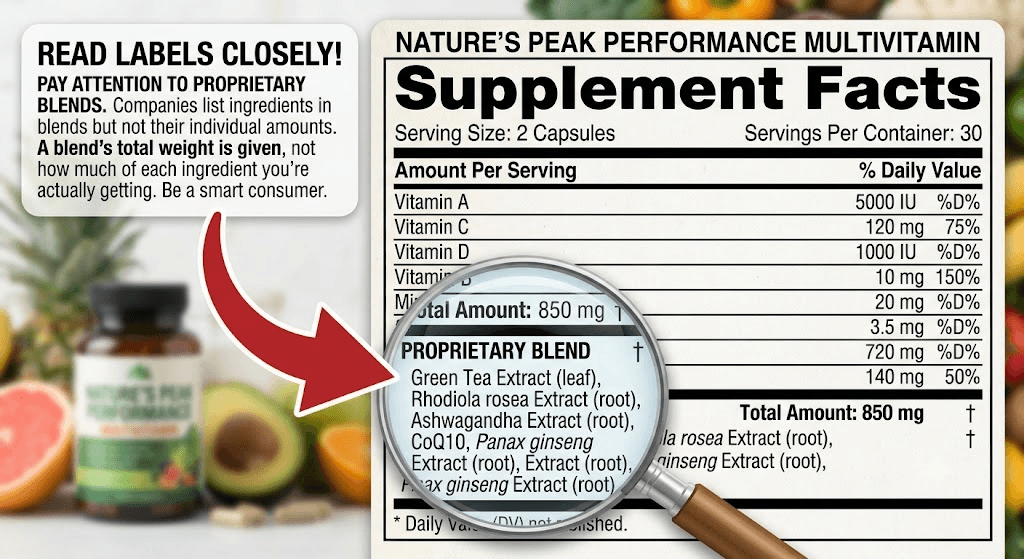
- Proprietary Blends: Many products hide their exact ingredient amounts behind a “proprietary blend.” This makes it impossible to know if you are getting a safe amount or an effective amount of any specific herb.
- Adulteration: Some low-quality brain supplements have been found to contain unlisted prescription drugs or illegal stimulants to make the product feel like it is working.
- Interactions: Brain supplements frequently interact with blood thinners, antidepressants, and blood pressure medications. Please refer to our guide to supplement interactions for more details.
Who Should Be Especially Careful?
Certain groups of people should avoid memory and focus supplements unless directed by a doctor:
- Pregnant or nursing women: Very few botanical supplements have been tested for safety during pregnancy.
- Older adults on multiple medications: The risk of harmful drug-supplement interactions increases with every medication you take.
- Children and teens: Products targeting focus are often misused by young people studying for exams. Most of these ingredients are not evaluated for developing brains.
- People with bleeding disorders: Ingredients like Ginkgo and high-dose omega-3s can thin the blood.
When to Speak With a Healthcare Professional
Do not use supplements to delay seeing a doctor if you are experiencing concerning symptoms. Schedule a medical appointment if you or a loved one experience:
- Memory loss that disrupts daily life (like forgetting how to drive to a familiar place).
- Difficulty completing familiar tasks at home or work.
- Confusion about time or place.
- Sudden, severe changes in mood or personality.
- New difficulties with reading, speaking, or writing.
How to Evaluate a Supplement in This Category
If you and your doctor decide that a memory or focus supplement is right for you, use this checklist to evaluate the product:
- Check for Transparency: Look for products that list the exact milligram amount of every ingredient. Avoid “proprietary blends.”
- Look for Third-Party Testing: Choose brands verified by independent labs like USP, NSF International, or ConsumerLab. This ensures the product actually contains what the label claims without heavy metals or contaminants.
- Evaluate the Claims: If a product promises to “cure brain fog forever,” “reverse memory loss,” or “boost IQ,” walk away. Honest companies use modest language like “may support” or “helps maintain.”
- Check the Dosages: Compare the label to clinical research. If a study used 300mg of an extract to get a result, and the supplement only contains 10mg, it is unlikely to be effective.
Related Product Analyses
Supplements Diary has also examined several products in the brain health category. We look closely at their ingredient lists, marketing claims, and pricing to help you make informed decisions:
- Read our NeuroPrime review to see how standard cognitive ingredients are combined in a daily capsule.
- Check out our Advanced Memory Formula analysis for an examination of a multi-ingredient approach to memory support.
- Take a look at our look at Pineal Guardian to learn how we evaluate products that make highly specific marketing claims.
Frequently Asked Questions
Can a supplement cure Alzheimer’s disease or dementia?
No. There are no dietary supplements, vitamins, or herbal extracts that can cure, treat, reverse, or prevent Alzheimer’s disease or any other form of dementia. If a company claims their product can treat these conditions, they are making illegal and unproven claims.
Are memory supplements safe to take every day?
Safety depends entirely on the specific ingredients, the dosage, and your personal health history. While basic vitamins are generally safe daily within recommended limits, herbal extracts like Huperzine A or Ginkgo may have long-term side effects or interact with daily medications. Always check with a pharmacist or doctor.
How long does it take for focus supplements to work?
This depends on the formula. Products containing caffeine or L-theanine may produce noticeable alertness within 30 to 60 minutes. However, herbal ingredients like Bacopa monnieri or Ginkgo biloba are typically studied over a period of 4 to 12 weeks of daily use before mild results are observed.
What is the best vitamin for brain fog?
There is no single “best” vitamin for everyone. However, if your brain fog is caused by a nutrient deficiency, addressing that deficiency can help. Vitamin B12 and Vitamin D deficiencies are common and can both cause cognitive sluggishness. A blood test from your doctor can confirm if you need to supplement these specific vitamins.
Conclusion
The market for memory and focus supplements is filled with products promising sharp mental clarity. While ingredients like L-theanine, Bacopa monnieri, and B-vitamins have some scientific backing for supporting normal brain function, the evidence is often mixed. Supplements should never replace medical care, a healthy diet, adequate sleep, and regular exercise.
Remember that no supplement can cure or prevent cognitive diseases. Always read labels carefully, avoid secretive proprietary blends, and have an honest conversation with your healthcare provider before adding a new supplement to your daily routine.
References
- National Institutes of Health: Office of Dietary Supplements – Dietary Supplements for Older Adults – https://ods.od.nih.gov/factsheets/OlderAdults-HealthProfessional/
- National Center for Complementary and Integrative Health – Ginkgo – https://www.nccih.nih.gov/health/ginkgo
- U.S. Food and Drug Administration – Dietary Supplements – https://www.fda.gov/food/dietary-supplements
- National Institutes of Health: Office of Dietary Supplements – Vitamin B12 Fact Sheet for Consumers – https://ods.od.nih.gov/factsheets/VitaminB12-Consumer/

Dr. Emma Myers is a medical student at UNC School of Medicine in Chapel Hill, with a focus on autoimmune dermatology. She grew up in Durham, North Carolina, and completed her undergraduate studies at the University of Virginia, majoring in Human Biology and Spanish. Emma has worked as a medical assistant in dermatology, gaining experience in cosmetic and medical dermatology. She leads advocacy groups for autoimmune skin disorders and is involved in research on autoimmune diseases, skin safety, and early diagnosis. Outside of medicine, she is a certified yoga sculpt instructor and enjoys outdoor activities with her dog.