
Waking up multiple times a night to use the bathroom is a frustrating experience that affects millions of men as they get older. Often, this frequent nighttime urination is connected to a condition known as an enlarged prostate, or benign prostatic hyperplasia (BPH). When sleep is constantly interrupted, it can lead to daytime fatigue, mood changes, and a reduced quality of life.
This article explores the connection between the prostate gland and urinary habits. We will examine why an enlarged prostate causes you to wake up at night, the common signs to watch for, and what the current scientific evidence says about popular botanical supplements marketed for prostate health.
Quick Answer
An enlarged prostate causes frequent nighttime urination (nocturia) by pressing against the urethra and irritating the bladder. This pressure prevents the bladder from emptying completely during the day, causing it to fill up faster at night. Additionally, the bladder wall may thicken and become overly sensitive, creating a sudden urge to urinate even when it contains very little fluid.
What Is an Enlarged Prostate?
The prostate is a small, walnut-sized gland that is part of the male reproductive system. It sits just below the bladder and surrounds the urethra, which is the tube that carries urine from the bladder out of the body.
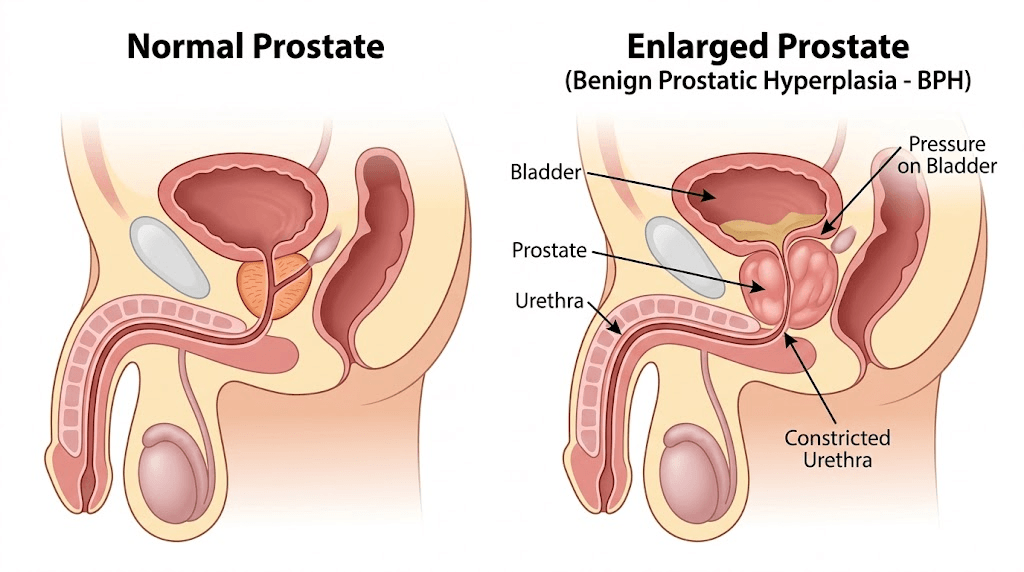
As men age, the prostate gland naturally tends to grow. This non-cancerous growth is medically referred to as benign prostatic hyperplasia (BPH). “Benign” means it is not cancer, and “hyperplasia” means an abnormal increase in the number of cells. Because the prostate wraps around the urethra, its growth can gradually squeeze the tube, much like stepping on a garden hose. This squeezing is responsible for many of the urinary changes men notice in their fifties, sixties, and beyond.
Common Causes or Contributing Factors
The exact reason the prostate continues to grow throughout a man’s life is not entirely understood, but medical researchers believe it is tied to natural aging and hormonal changes.
- Aging: Prostate growth is a normal part of getting older. BPH rarely causes symptoms in men under the age of 40, but by age 60, more than half of all men have some degree of BPH.
- Hormonal shifts: As men age, the balance of testosterone and estrogen in the body changes. Additionally, testosterone is converted into another hormone called dihydrotestosterone (DHT), which plays a significant role in prostate cell growth.
- Family history: Having a father or brother with an enlarged prostate may increase the likelihood that you will also develop the condition.
- Lifestyle factors: Some studies suggest that obesity, a lack of physical activity, and conditions like type 2 diabetes may contribute to the development of BPH, though the exact connections are still being researched. For more on this, you can read about dietary approaches for prostate health.
Common Signs or Symptoms
The symptoms of an enlarged prostate often start mildly and slowly worsen over time. It is important to remember that symptoms alone cannot confirm a diagnosis, as other urinary tract issues can cause similar problems. Common signs include:

- Frequent nighttime urination (nocturia): Waking up two or more times a night to urinate.
- Increased daytime frequency: Feeling the need to urinate every one to two hours during the day.
- Urgency: A sudden, strong desire to urinate that is difficult to delay.
- Weak urine stream: A flow that is slow, weak, or stops and starts.
- Difficulty starting: Straining or waiting a long time for the urine flow to begin.
- Incomplete emptying: The sensation that the bladder is not completely empty after finishing.
- Dribbling: Leaking drops of urine after you have finished urinating.
Why Does BPH Cause Frequent Nighttime Urination?
The specific symptom of waking up at night to urinate is a direct result of how the enlarged prostate affects the bladder and the urethra.
First, because the enlarged prostate squeezes the urethra, the bladder has to work much harder to push urine out. Over time, the muscular wall of the bladder becomes thicker and stronger to compensate for this resistance. Eventually, the bladder muscle can become overly sensitive and irritable. It begins to contract even when it only holds a small amount of urine, creating a sudden urge to go.
Second, the restriction in the urethra often prevents the bladder from emptying completely. If your bladder is only half empty when you go to sleep, it will fill up much faster, prompting your brain to wake you up a few hours later.
How the Relevant Supplements Are Supposed to Work
Many dietary supplements are marketed to men experiencing frequent nighttime urination. These products usually contain a blend of plant extracts, vitamins, and minerals.
Manufacturers claim that these ingredients may support urinary tract health by promoting a normal prostate size, balancing hormone levels (specifically targeting DHT), or reducing inflammation in the urinary tract. However, it is essential to understand that supplements are not medications. They are intended to support overall health, and results have been mixed in clinical settings.
Common Ingredients
When reviewing prostate support formulas, you will frequently encounter the same group of ingredients. Here is a breakdown of what they are and what the research suggests.
Saw Palmetto
Saw palmetto is an extract from the berries of a small palm tree native to the southeastern United States. It is the most common ingredient in prostate supplements. It is thought to work by inhibiting the enzyme that converts testosterone into DHT. While early studies showed promise, more recent, large-scale studies have shown mixed results regarding its ability to relieve BPH symptoms compared to a placebo.
Beta-Sitosterol
Beta-sitosterol is a plant sterol found in many fruits, vegetables, nuts, and seeds. Some studies have investigated whether this ingredient may influence urinary symptoms. Research suggests it may help improve urinary flow and reduce the feeling of incomplete emptying, though it does not actually shrink the size of the prostate gland.
Pygeum
Pygeum comes from the bark of the African plum tree. It has been used in traditional medicine for urinary problems. Some limited evidence indicates that pygeum may help improve urinary flow and reduce nighttime waking, possibly due to its anti-inflammatory properties, but larger modern studies are needed to confirm these effects.
Pumpkin Seed Extract
Pumpkin seeds are rich in zinc and certain plant compounds. They have been studied for their potential to support bladder function and reduce prostate-related urinary symptoms. While considered safe, evidence is still considered mixed, and it is often combined with saw palmetto in clinical trials, making it difficult to judge its independent effects.

Zinc
Zinc is a necessary mineral, and the prostate gland contains a higher concentration of zinc than almost any other tissue in the body. While maintaining adequate zinc levels is important for normal prostate function, there is limited evidence that taking large doses of zinc supplements will improve the symptoms of an existing enlarged prostate.
What Does the Evidence Show?
When evaluating the science behind prostate supplements, it is important to distinguish between laboratory studies (test tubes or animals) and human clinical trials.
- Mixed to Insufficient Evidence: For saw palmetto, the National Institutes of Health (NIH) notes that while some small studies showed benefits, several large, rigorous human trials found it was no more effective than a placebo for treating BPH symptoms.
- Limited but Positive Evidence: Beta-sitosterol has the strongest backing among common botanical ingredients. Several human trials suggest it can offer modest improvements in urinary flow and symptom scores, though it does not reduce prostate volume.
- Insufficient Evidence for Shrinking the Prostate: Currently, there is no reliable human research to support the idea that over-the-counter dietary supplements can significantly shrink an enlarged prostate. Medical treatments remain the standard for reducing prostate size.
Risks and Side Effects
Even though supplements are sold over the counter, they can carry risks.
- Mild side effects: Botanicals like saw palmetto and pygeum are generally well-tolerated but can cause mild stomach upset, nausea, or headaches in some men.
- Interactions with medications: Prostate supplements can interact with prescription medications. For example, some ingredients may thin the blood, interacting with blood thinners like warfarin. They might also interfere with hormone replacement therapies or standard BPH medications prescribed by a doctor.
- Proprietary blends: Many supplements use “proprietary blends,” meaning they list the ingredients but not the exact amount of each. This makes it impossible to know if you are getting a safe or effective dose.
- Delayed medical care: The biggest risk of relying on supplements is that it may delay proper medical evaluation. Frequent urination can be a sign of BPH, but it can also indicate prostate cancer, a urinary tract infection, or diabetes.
Always review a reliable supplement safety guide before starting a new regimen.
Who Should Be Especially Careful?
Certain individuals need to exercise extra caution with prostate supplements:
- Men taking prescription BPH medications: Combining supplements with drugs like alpha-blockers or 5-alpha reductase inhibitors can cause blood pressure to drop too low or lead to unpredictable side effects.
- Men with a history of prostate cancer: Because some ingredients affect hormone levels, men who have had prostate cancer should not take these supplements without direct medical supervision.
- Individuals planning for surgery: Some herbal extracts can increase bleeding risk. You should stop taking them at least two weeks before any scheduled surgery.
When to Speak With a Healthcare Professional
You should always talk to your doctor before adding a new herbal supplement to your routine. Furthermore, make an appointment with a healthcare professional if you experience:
- A sudden, complete inability to urinate (this is a medical emergency).
- Pain or a burning sensation during urination.
- Blood in your urine.
- Frequent nighttime urination that is leaving you exhausted during the day.
- Loss of bladder control (incontinence).
A doctor can perform tests to rule out prostate cancer and other serious conditions, ensuring you get the correct diagnosis.
How to Evaluate a Supplement in This Category
If you and your doctor decide a prostate support supplement is appropriate, use this checklist to evaluate your options:
- Check for third-party testing: Look for seals from organizations like NSF International, USP, or ConsumerLab. These indicate the product contains what the label claims and is free of harmful contaminants.
- Avoid proprietary blends: Choose products that clearly state the exact milligram amount of every active ingredient.

- Beware of exaggerated claims: Avoid products that claim to “cure” BPH, “shrink” the prostate overnight, or guarantee you will never wake up to pee again.
- Look for standardized extracts: Ensure the label specifies that ingredients like saw palmetto are standardized to contain a specific percentage of active compounds (e.g., fatty acids).
Related Product Analyses
Supplements Diary has examined several formulas currently available on the market. If you are researching specific brands, you can read our detailed breakdowns of their ingredient profiles, marketing claims, and pricing structures.
- Read our Prostadine review to understand its liquid-drop delivery system.
- Check out our Ultra Prosta Fix review for an analysis of its specific botanical blend.
- Read our ProtoFlow review for a closer look at its ingredient transparency.
- Explore our Fluxactive Complete review to see how it compares to standard market offerings.
- Read our TitanFlow review for our breakdown of its targeted formulation.
Frequently Asked Questions
Can drinking less water before bed stop nighttime urination?
Reducing your fluid intake one to two hours before bed can help decrease the amount of urine your bladder produces overnight. Avoiding alcohol and caffeine in the evening is also helpful, as both act as diuretics and can irritate the bladder. However, if your prostate is significantly enlarged, fluid restriction alone may not stop nocturia completely.
Does an enlarged prostate mean I have a higher risk of prostate cancer?
No. Benign prostatic hyperplasia (BPH) is not cancer, and having an enlarged prostate does not increase your risk of developing prostate cancer. However, because the symptoms of both conditions can overlap, it is highly recommended to see a doctor for a proper evaluation.
How long do prostate supplements take to work?
If a supplement is going to provide any symptom relief, it typically takes several weeks to a few months of consistent use for the botanical extracts to build up in the system. They do not offer immediate, overnight relief.
Are there any natural ways to support bladder control at night?
In addition to managing fluid intake before bed, some men find pelvic floor exercises (Kegel exercises) helpful. These exercises strengthen the muscles around the bladder and urethra, potentially improving control over the urge to urinate.
Conclusion
Frequent nighttime urination is one of the most common and disruptive symptoms of an enlarged prostate. As the prostate grows, it restricts the urethra and irritates the bladder, making it difficult to sleep through the night.
While dietary supplements featuring ingredients like saw palmetto and beta-sitosterol are widely popular, the scientific evidence supporting them is mixed. They are not a replacement for proper medical evaluation or prescription treatments. If you are waking up multiple times a night to urinate, prioritize a conversation with your healthcare provider to confirm the cause and determine the safest, most effective approach for your specific situation.
References
- National Institute of Diabetes and Digestive and Kidney Diseases (NIDDK) – Prostate Enlargement (Benign Prostatic Hyperplasia) – https://www.niddk.nih.gov/health-information/urologic-diseases/prostate-problems/prostate-enlargement-benign-prostatic-hyperplasia
- National Center for Complementary and Integrative Health (NCCIH) – Saw Palmetto – https://www.nccih.nih.gov/health/saw-palmetto
- Mayo Clinic – Benign prostatic hyperplasia (BPH) – https://www.mayoclinic.org/diseases-conditions/benign-prostatic-hyperplasia/symptoms-causes/syc-20370087
- Urology Care Foundation – What is Benign Prostatic Hyperplasia (BPH)? – https://www.urologyhealth.org/urologic-conditions/benign-prostatic-hyperplasia-(bph

Dr. Emma Myers is a medical student at UNC School of Medicine in Chapel Hill, with a focus on autoimmune dermatology. She grew up in Durham, North Carolina, and completed her undergraduate studies at the University of Virginia, majoring in Human Biology and Spanish. Emma has worked as a medical assistant in dermatology, gaining experience in cosmetic and medical dermatology. She leads advocacy groups for autoimmune skin disorders and is involved in research on autoimmune diseases, skin safety, and early diagnosis. Outside of medicine, she is a certified yoga sculpt instructor and enjoys outdoor activities with her dog.