
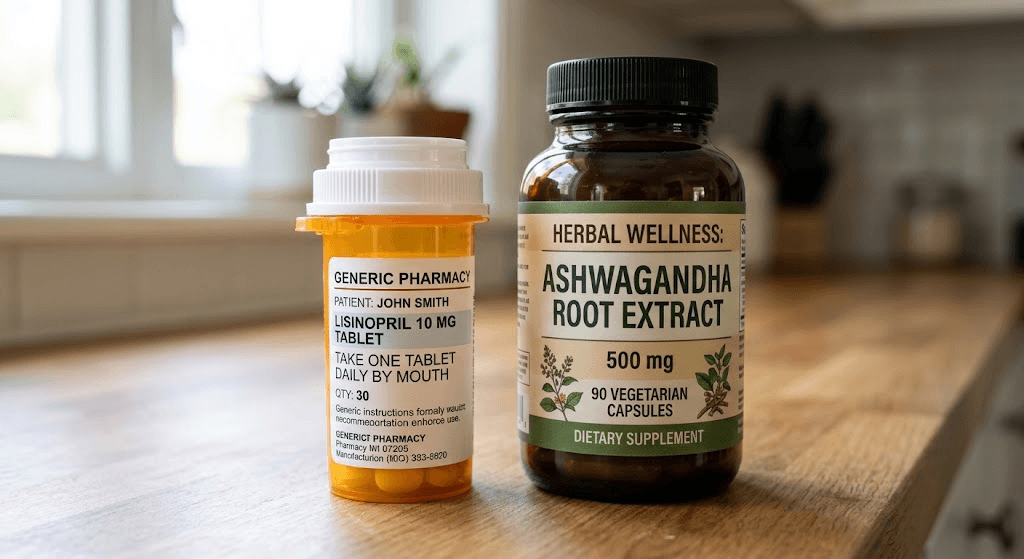
Many people add dietary supplements to their daily routines hoping to support their overall health and wellness. However, a common misconception is that because a product is labeled “natural,” it is inherently safe to mix with prescription medications.
In reality, active ingredients in vitamins, minerals, and herbal formulas can significantly alter how your body absorbs, processes, or excretes pharmaceutical drugs. This guide will explain how supplement-medication interactions occur, which common ingredients require extra caution, and how to evaluate safety before adding a new product to your regimen. By understanding these mechanisms, you can make informed decisions and have more productive conversations with your healthcare provider.
Quick Answer
Dietary supplements can interact with prescription medications by blocking their absorption, speeding up how quickly the body breaks them down, or amplifying their effects. Common supplements like St. John’s wort, berberine, ginkgo biloba, and high-dose minerals often interact with blood thinners, blood pressure medications, and diabetes treatments. Always consult a healthcare professional before combining supplements with prescribed drugs.
What Are Supplement-Drug Interactions?
A supplement-drug interaction occurs when a dietary supplement changes the way a medication works in your body. Supplements can contain highly active biological compounds. When these compounds meet pharmaceutical drugs in your digestive tract, liver, or bloodstream, they can create unintended effects.
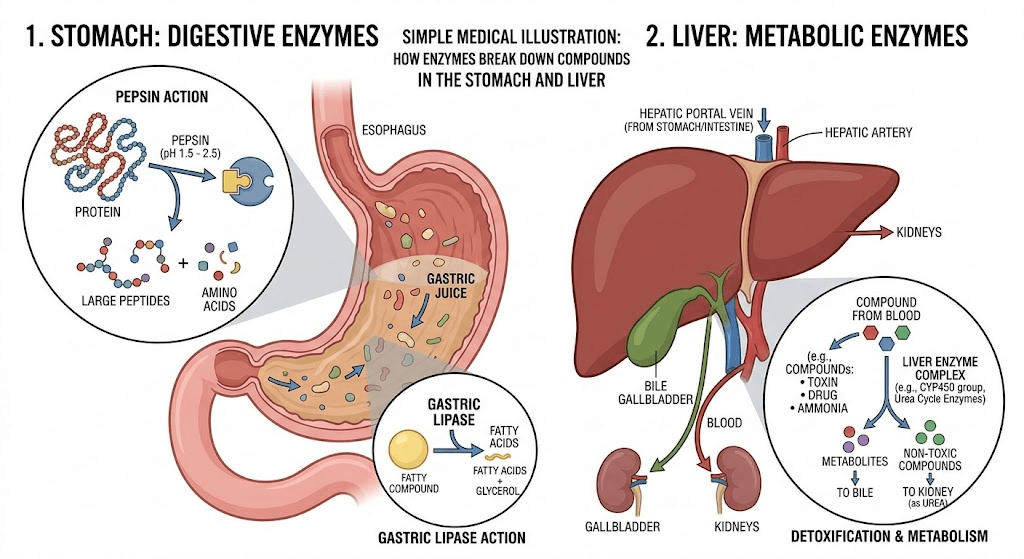
These interactions usually happen in a few specific ways:
- Altered absorption: A supplement might bind to a drug in your stomach, preventing it from entering your bloodstream.
- Metabolism interference: Many drugs are broken down by specific liver enzymes. Certain herbs can block or stimulate these enzymes, causing the drug levels in your blood to become dangerously high or uselessly low.
- Additive effects: If a supplement and a medication have similar physiological effects, taking them together might amplify the result beyond a safe limit.
Common Causes or Contributing Factors
Several factors increase the likelihood of experiencing a supplement-drug interaction:
- Polypharmacy: Taking multiple prescription medications simultaneously increases the mathematical odds of an interaction.
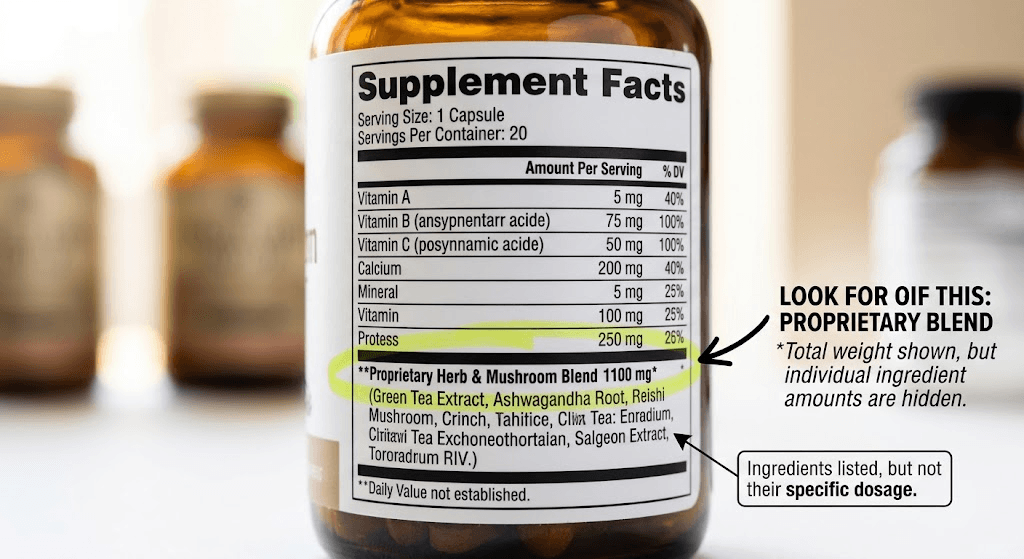
- Complex Supplement Blends: Products containing dozen of herbs or proprietary blends make it difficult to predict how the body will react.
- Age-Related Changes: As we age, our liver and kidneys process substances more slowly, increasing the risk of compound buildup in the blood.
- Underlying Health Conditions: Pre-existing issues with the liver, kidneys, or digestive tract can alter how both supplements and drugs are metabolized.
Common Ingredients and Interaction Risks
When evaluating products, certain popular ingredients frequently flag as potential interaction risks. Here is a look at what the evidence suggests about common supplement components.
Berberine
- What it is: A bitter-tasting botanical compound found in several plants, often marketed for metabolic support.
- Why manufacturers include it: It is widely used in blood sugar and weight management supplements.
- Medication interactions: Berberine may amplify the effects of blood-glucose-lowering medications, potentially leading to hypoglycemia (low blood sugar). It also affects specific liver enzymes (like CYP3A4), which can alter the breakdown of statins, blood pressure drugs, and immunosuppressants.
St. John’s Wort
- What it is: A flowering plant often used in traditional medicine for mood support.
- Why manufacturers include it: It is a common ingredient in natural stress and mood-relief formulas.
- Medication interactions: St. John’s wort is notorious for speeding up liver enzymes. This can rapidly decrease the effectiveness of crucial medications, including birth control pills, antidepressants, heart medications, and blood thinners.
Ginkgo Biloba
- What it is: An extract from the leaves of the Ginkgo tree, often found in cognitive and ear-health supplements.
- Why manufacturers include it: Manufacturers use it to support blood circulation and memory.
- Medication interactions: Ginkgo may slow blood clotting. Taking it alongside prescription blood thinners (like warfarin) or anti-platelet drugs can significantly increase the risk of bleeding.
Saw Palmetto
- What it is: An extract from the fruit of a small palm tree.
- Why manufacturers include it: It is heavily featured in men’s health and prostate support supplements.
- Medication interactions: Evidence is mixed, but saw palmetto may slow blood clotting. It should be used with extreme caution by those on anticoagulant drugs or those scheduled for surgery.
High-Dose Minerals (Calcium, Magnesium, Zinc)
- What they are: Essential nutrients required for bodily function.
- Why manufacturers include them: They are added to everything from bone health supplements to testosterone support formulas.
- Medication interactions: Minerals can bind to certain antibiotics (like tetracyclines and fluoroquinolones) and thyroid medications in the digestive tract, preventing the body from absorbing the drug.
What Does the Evidence Show?
The scientific community evaluates supplement interactions through various types of research, and the level of certainty varies.
- Strong or reasonably established evidence: We have clear clinical data showing that St. John’s wort interferes with a wide variety of life-saving medications. Similarly, the interaction between heavy mineral supplements and certain antibiotics is well-documented in human pharmacology.
- Limited or preliminary evidence: Many interactions are observed primarily in laboratory or animal studies. For example, while lab tests show certain adaptogenic herbs might influence liver enzymes, the real-world effect in humans taking normal doses remains less clear.
- Insufficient evidence: For many proprietary blends featuring dozens of exotic botanicals, there are simply no human trials evaluating how the finished commercial product interacts with standard prescription drugs.
It is crucial to remember that laboratory findings do not always translate to confirmed human effects, and the absence of safety data does not guarantee a product is safe.
Risks and Side Effects
Mixing supplements with medications without medical guidance can lead to serious adverse events, including:
- Medication Failure: If a supplement speeds up the clearance of a drug, the underlying medical condition (such as high blood pressure or an infection) may worsen because the medication is no longer effective.
- Drug Toxicity: If a supplement blocks the liver from breaking down a drug, the medication can build up to toxic levels, causing severe side effects.
- Bleeding Risks: Combining circulatory supplements with blood thinners can lead to dangerous internal bleeding.
- Undisclosed Ingredients: Products featuring proprietary blends hide exact ingredient amounts, making it impossible for doctors to predict interaction severity. Furthermore, concerns exist regarding contaminated or adulterated products occasionally found in the marketplace.
Who Should Be Especially Careful?
While everyone should practice caution, the following groups must be exceptionally careful with dietary supplements:
- People taking prescription blood thinners or heart medications
- Individuals managing diabetes with insulin or prescribed oral drugs
- Older adults taking multiple daily medications
- Pregnant or breastfeeding people
- People preparing for surgery (doctors generally advise stopping all non-essential supplements weeks before surgery)
- Individuals with kidney or liver conditions
- People with hormone-sensitive conditions
When to Speak With a Healthcare Professional
You should always consult a pharmacist or doctor before starting a new supplement, especially if you are currently taking prescription drugs.
Do not attempt to manage serious symptoms like chronic chest pain, severe dizziness, erratic blood sugar readings, or acute infections through dietary supplements alone. Never stop, reduce, or alter a prescribed medication in favor of a dietary supplement without explicit instructions from your physician.
How to Evaluate a Supplement in This Category
If your doctor approves the use of a dietary supplement alongside your medications, use this practical checklist to evaluate the product:
- Transparent ingredient amounts: Avoid products that hide their dosages behind “proprietary blends.”
- Independent evidence: Look for products that rely on third-party testing for purity rather than just customer testimonials.
- Realistic claims: Be wary of supplements that promise to “cure,” “treat,” or “reverse” a medical condition.
- Allergen and warning information: Check the label for clear interaction warnings and manufacturing transparency.
- General safety research: Read our guide to supplement safety for a deeper dive into regulatory standards.
Related Product Analyses
Supplements Diary has also examined several products marketed for various areas of health, analyzing how their specific ingredients might interact with medications. These reviews evaluate their ingredient transparency, claims, pricing, and limitations.
- If you are exploring blood sugar support, read the Sugar Defender ingredient analysis and our Berberine supplement review to understand the complex herbal interactions involved.
- For those looking into hearing and ear health, our Quietum Plus review examines a formula containing circulatory herbs like ginkgo.
- Readers investigating men’s health can review our Prostadine review and our TurboTest analysis to see how ingredients like saw palmetto and adaptogens are utilized and where caution is necessary.
Frequently Asked Questions
Can I take supplements at a different time of day to avoid interactions?
Spacing out supplements and medications can prevent some absorption interactions in the stomach (like calcium blocking antibiotics). However, it does not prevent metabolic interactions in the liver. If a supplement affects liver enzymes, changing the time of day you take it will not eliminate the risk.
Are herbal supplements safer than synthetic vitamins?
No. “Natural” does not mean safe. Herbal supplements contain complex, active biological compounds that can interact with the body and prescription drugs just as potently as synthetic substances.
Will my pharmacist know about supplement interactions?
Yes, pharmacists are highly trained in pharmacokinetics and drug interactions. Providing your pharmacist with a complete list of your prescription drugs, over-the-counter medications, and dietary supplements is one of the best ways to protect yourself.
How do proprietary blends affect interaction risks?
Proprietary blends list the ingredients but not the exact amounts of each herb or nutrient. This lack of transparency makes it extremely difficult for medical professionals to assess whether an ingredient is present in a high enough dose to cause a dangerous interaction.
Conclusion
Dietary supplements can play a role in general wellness support, but they are not exempt from biological interactions. Mixing vitamins, minerals, or botanical extracts with prescription medications can alter drug absorption, interfere with liver metabolism, or amplify physiological effects dangerously.
Because individual responses vary and product transparency is not always guaranteed, safety must come first. Never use dietary supplements to replace prescribed medical treatment, and always discuss your complete supplement routine with a qualified healthcare provider or pharmacist to ensure you are making informed, safe decisions.
References
National Center for Complementary and Integrative Health – Dietary Supplements: What You Need to Know – https://www.nccih.nih.gov/health/dietary-supplements-what-you-need-to-know
U.S. Food and Drug Administration – Mixing Medications and Dietary Supplements Can Endanger Your Health – https://www.fda.gov/consumers/consumer-updates/mixing-medications-and-dietary-supplements-can-endanger-your-health
Office of Dietary Supplements (NIH) – Botanical Dietary Supplements: Background Information – https://ods.od.nih.gov/factsheets/BotanicalBackground-HealthProfessional/
MedlinePlus – Drugs, Herbs and Supplements – https://medlineplus.gov/druginformation.html

Dr. Emma Myers is a medical student at UNC School of Medicine in Chapel Hill, with a focus on autoimmune dermatology. She grew up in Durham, North Carolina, and completed her undergraduate studies at the University of Virginia, majoring in Human Biology and Spanish. Emma has worked as a medical assistant in dermatology, gaining experience in cosmetic and medical dermatology. She leads advocacy groups for autoimmune skin disorders and is involved in research on autoimmune diseases, skin safety, and early diagnosis. Outside of medicine, she is a certified yoga sculpt instructor and enjoys outdoor activities with her dog.