
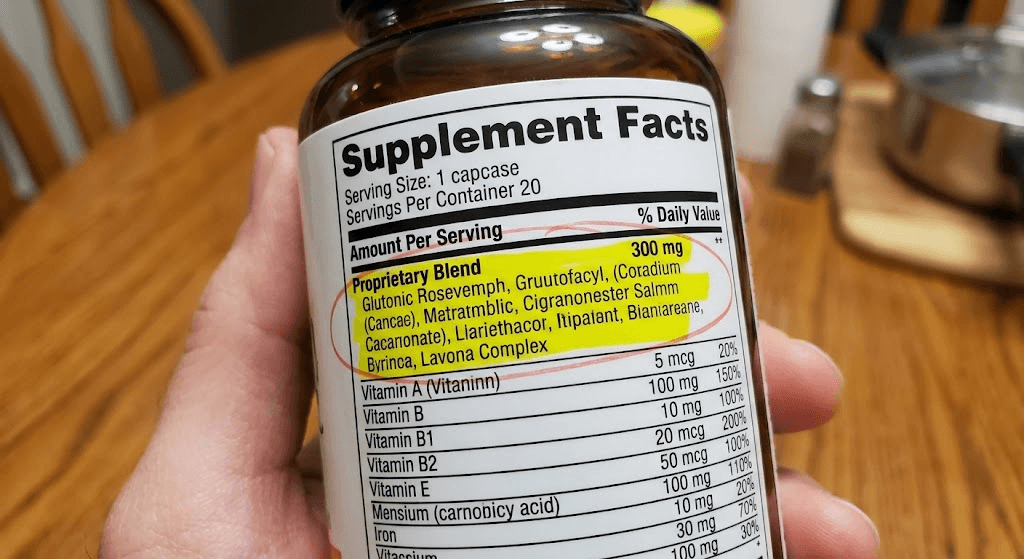
Turning a dietary supplement bottle around to read the Supplement Facts label can sometimes feel like trying to decode a secret language. Among the milligrams and daily values, you will frequently find the phrase “proprietary blend,” followed by a long list of herbs and botanical extracts.
For many consumers, seeing a dozen natural ingredients grouped together looks impressive. However, understanding how to read these labels is a crucial part of supplement safety. Knowing what a proprietary blend is—and what it hides—can help you make better, more informed choices about your health.
This article explains what proprietary blends are, why supplement dosage matters, and how to evaluate the safety and transparency of the products you buy.
Quick Answer
A proprietary blend is a mixture of supplement ingredients listed on a label with a single total weight, rather than showing the exact amount of each individual ingredient. While the U.S. Food and Drug Administration (FDA) requires ingredients in the blend to be listed in descending order by weight, manufacturers do not have to disclose the specific dosage of each component. This makes it difficult to know if the supplement contains enough of an ingredient to be effective, or a safe amount to prevent side effects.
What Is a Proprietary Blend?
In the United States, dietary supplements must carry a Supplement Facts panel. Usually, this panel lists each nutrient or botanical alongside its exact weight (such as milligrams or micrograms).
However, regulatory guidelines allow manufacturers to group certain ingredients together under a custom name, such as a “Focus Matrix” or a “Digestive Support Complex.” This is a proprietary blend.
The label will display the total weight of the entire blend. Beneath that, it will list the individual ingredients contained within the blend. Legally, these ingredients must be listed in descending order of predominance by weight. The first ingredient listed makes up the largest portion of the blend, while the last ingredient makes up the smallest. The exact milligrams of each specific ingredient remain a secret.
Why Manufacturers Use Proprietary Blends
There are a few reasons why a supplement company might choose to formulate a product using a proprietary blend.
First, manufacturers often state that a proprietary blend protects their unique recipe from being copied by competitors. Formulating a supplement takes time and research, and hiding the exact ratios is a way to protect intellectual property.
However, critics of the supplement industry point out a different, more common reason: cost-cutting. Because only the total weight is disclosed, a manufacturer can use a large amount of a cheap ingredient as the first item in the blend, followed by “dusting” (using tiny, ineffective amounts) of more expensive, highly sought-after ingredients. This allows the product to advertise premium ingredients on the front of the bottle without actually providing a meaningful dose.
Why Individual Ingredient Dosage Matters
Dosage is arguably the most important factor when evaluating a dietary supplement. In scientific research, clinical trials test specific amounts of an ingredient to determine if it is safe and if it provides a benefit.
If a clinical study finds that 500 milligrams (mg) of a specific herbal extract may support joint comfort, a supplement containing only 50 mg of that exact herb is unlikely to provide the same result.
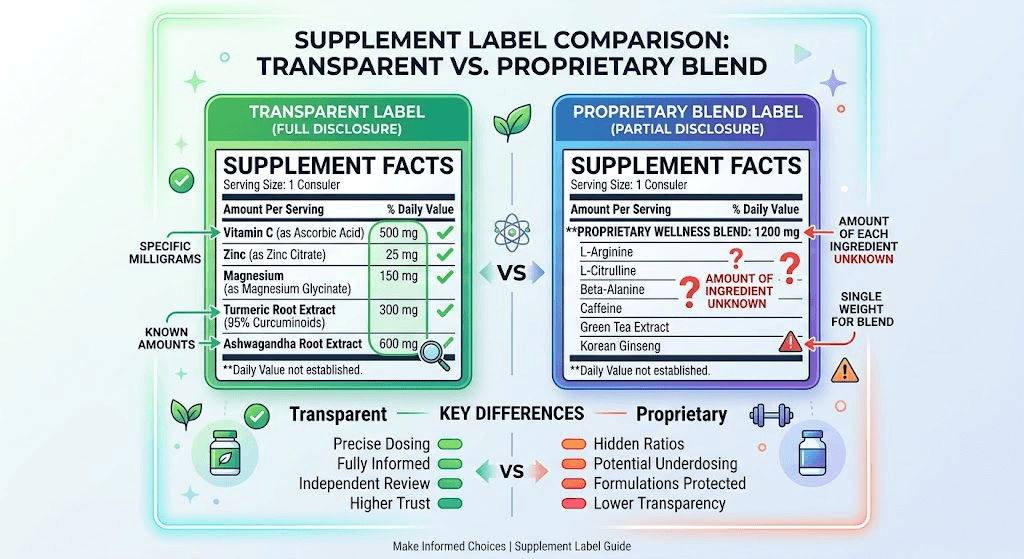
When an ingredient is hidden inside a proprietary blend, the consumer cannot compare the product to scientific research. The blend might contain an effective dose, or it might contain just a fraction of what is needed. Without transparent labeling, it is impossible to know.
What Does the Evidence Show?
The evidence regarding dietary supplements must be evaluated ingredient by ingredient, and dose by dose.
- Strong or reasonably established evidence: Some vitamins, minerals, and specific botanical extracts have well-documented effective dosages established by randomized controlled trials. For example, the evidence for melatonin in supporting sleep onset is based on specific milligram amounts.
- Limited or mixed evidence: Many complex herbal blends lack independent clinical trials testing the finished formula. Instead, manufacturers borrow scientific studies conducted on single ingredients and apply those claims to their proprietary blend.
- Insufficient evidence: There is generally insufficient evidence to prove that a proprietary blend is effective if the active ingredients are present in amounts far lower than what has been studied in human trials.
This highlights why transparency matters. Evidence for a single ingredient does not prove the effectiveness of a multi-ingredient product unless the dosages match the clinical research.
Risks and Side Effects
Proprietary blends do not just obscure potential benefits; they can also mask potential risks.
- Hidden Stimulants: Some proprietary blends, especially in weight management or energy supplements, contain multiple sources of caffeine (like green tea extract, guarana, and yerba mate). Without knowing the exact dosage of each, a consumer could inadvertently consume an unsafe amount of stimulants, leading to jitteriness, rapid heart rate, or elevated blood pressure.
- Medication Interactions: Many botanical ingredients can interact with prescription medications. For example, St. John’s wort and certain citrus extracts can alter how the liver metabolizes drugs. If a consumer does not know the dosage of an interacting herb, they cannot accurately assess their risk.
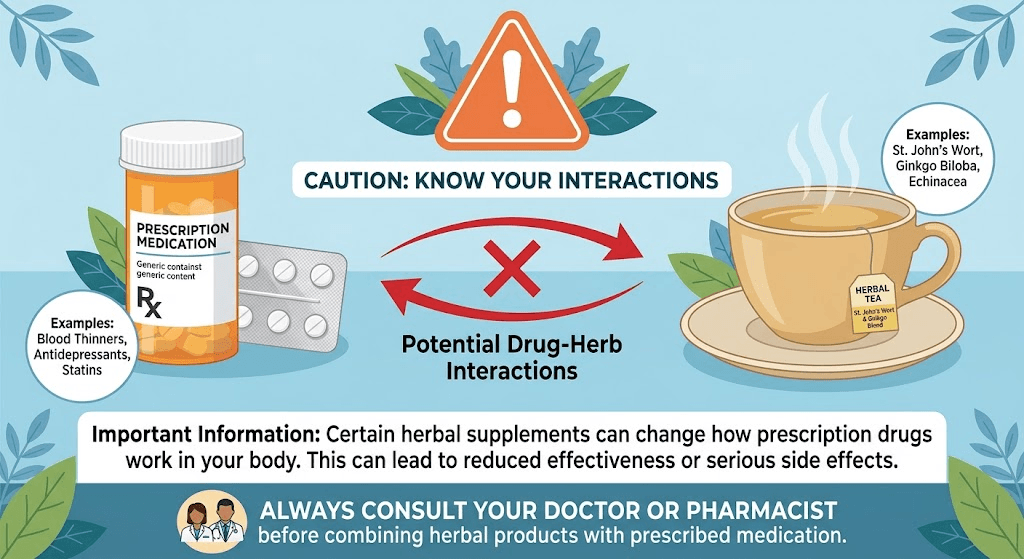
- Toxicity Risks: While natural, certain vitamins and minerals can be harmful in excessive amounts. A transparent label is necessary to ensure you are not exceeding safe upper intake levels, especially if you take multiple supplements daily.
Who Should Be Especially Careful?
Due to the lack of transparency, certain groups should exercise extreme caution or avoid proprietary blends entirely:
- Pregnant or breastfeeding people: Exact dosages are critical to ensure no harm comes to fetal or infant development.
- People taking prescription medication: Hidden dosages make it difficult to predict drug-herb interactions.
- Older adults: Age-related changes in liver and kidney function make older adults more sensitive to high doses of certain compounds.
- People preparing for surgery: Many herbs affect blood clotting or anesthesia. Surgeons usually require a clear list of all supplement dosages prior to a procedure.
When to Speak With a Healthcare Professional
You should always speak with a healthcare provider before starting a new supplement, especially one containing a proprietary blend of unfamiliar herbs.
Do not attempt to manage symptoms of a diagnosed medical condition using over-the-counter dietary supplements. If you experience severe side effects after taking a supplement—such as sudden dizziness, irregular heartbeat, severe gastrointestinal distress, or allergic reactions—stop taking the product immediately and seek medical evaluation.
How to Evaluate a Supplement in This Category
When shopping for supplements, use this practical checklist to evaluate transparency and safety:
- Check for clear dosages: Look for products that list the exact milligram amount of every active ingredient.
- Beware of “fairy dusting”: If a blend contains 20 ingredients but the total weight is only 300 mg, the amounts of individual ingredients are likely too small to be meaningful.
- Look for third-party testing: Reputable brands often have their products tested by independent organizations (like NSF, USP, or ConsumerLab) to verify that what is on the label is actually in the bottle.
- Review the claims: Avoid products that promise guaranteed results, use fear-based language, or claim to cure diseases.
- Examine the return policy: Transparent companies usually offer clear, realistic return terms without hidden subscription traps.
Related Product Analyses
Supplements Diary has also examined several products marketed for various areas of health. These reviews evaluate their ingredient transparency, claims, pricing, and limitations.
- To see an example of how we evaluate ear-health formulas, you can read our Quietum Plus review.
- For a look at transparent dosing in blood sugar support, see the Sugar Defender ingredient analysis.
- We also assess digestive blends in our PrimeBiome review and prostate support ingredients in our Prostadine review.
- Finally, to understand how we review complex, multi-ingredient wellness formulas, explore the PinealX formulation.
Frequently Asked Questions
Are proprietary blends illegal?
No. Proprietary blends are completely legal under FDA regulations for dietary supplements, provided the total weight of the blend is listed and the ingredients are arranged in descending order by weight.
Why do doctors prefer fully transparent supplement labels?
Healthcare professionals prefer transparent labels because it allows them to accurately assess safety, prevent toxic overdoses, and check for exact dosage interactions with prescription medications.
Does a proprietary blend mean the supplement is low quality?
Not always. Some reputable companies use them to protect genuine intellectual property. However, a fully transparent label is generally considered a higher standard of consumer trust and safety.
How can I find out the exact amounts in a proprietary blend?
You usually cannot. Unless the manufacturer voluntarily discloses the formulation to you upon request, the exact ratios remain a company secret.
Can proprietary blends cause side effects?
Yes. Just like any supplement, the ingredients within a blend can cause side effects. The risk can be higher with proprietary blends because you do not know exactly how much of a potentially irritating or stimulating ingredient you are consuming.
Conclusion
A proprietary blend allows supplement manufacturers to bundle ingredients together under a single weight on the Supplement Facts label. While this practice is legal and sometimes used to protect commercial recipes, it prevents consumers from knowing the exact dosage of the ingredients they are taking.
Because scientific evidence relies on specific dosages to determine safety and effectiveness, a lack of transparency makes it difficult to evaluate a product’s true value. When possible, prioritizing supplements with fully transparent labels is the best way to make informed decisions, avoid accidental interactions, and ensure you are choosing a product that genuinely supports your wellness goals. Always consult with a healthcare professional before adding complex herbal blends to your routine.
References
National Center for Complementary and Integrative Health (NCCIH) – Using Dietary Supplements Wisely – https://www.nccih.nih.gov/health/using-dietary-supplements-wisely
U.S. Food and Drug Administration (FDA) – Dietary Supplement Labeling Guide: Chapter 6. Nutrition Labeling – https://www.fda.gov/food/dietary-supplements-guidance-documents-regulatory-information/dietary-supplement-labeling-guide-chapter-6-nutrition-labeling
National Institutes of Health (NIH) Office of Dietary Supplements – Dietary Supplements: What You Need to Know – https://ods.od.nih.gov/factsheets/WYNTK-Consumer/

Dr. Emma Myers is a medical student at UNC School of Medicine in Chapel Hill, with a focus on autoimmune dermatology. She grew up in Durham, North Carolina, and completed her undergraduate studies at the University of Virginia, majoring in Human Biology and Spanish. Emma has worked as a medical assistant in dermatology, gaining experience in cosmetic and medical dermatology. She leads advocacy groups for autoimmune skin disorders and is involved in research on autoimmune diseases, skin safety, and early diagnosis. Outside of medicine, she is a certified yoga sculpt instructor and enjoys outdoor activities with her dog.