
The dietary supplement market offers thousands of products designed to support overall wellness, fill nutritional gaps, and promote general health. However, because the industry is regulated differently than prescription medications, it has also become a frequent target for questionable marketing.
Every year, consumers lose money to supplement scams that promise miraculous results. From exaggerated health benefits to manipulated customer testimonials, identifying a reliable product can feel overwhelming. Many products rely on aggressive sales tactics rather than scientific evidence, leaving consumers frustrated and, in some cases, at risk for adverse health effects.
This article explains how to spot common red flags, how to identify fake reviews, and how to carefully evaluate dietary supplements before making a purchase.
Quick Answer
To spot a supplement scam, look for unrealistic promises such as guaranteed cures, rapid weight loss, or the phrase “clinically proven” without a link to published human trials. Always check for independent third-party testing, be cautious of hidden “proprietary blends,” and verify reviews outside of the manufacturer’s own website to ensure product safety and transparency.
What Are Supplement Scams?
A supplement scam occurs when a manufacturer or seller intentionally misleads consumers about what a dietary supplement can do, what it contains, or how it is billed.
Dietary supplements include vitamins, minerals, herbs, amino acids, and enzymes. Under United States law, the Food and Drug Administration (FDA) does not approve dietary supplements for safety or effectiveness before they are sold to the public. The responsibility for ensuring safety lies primarily with the manufacturer.
Because products can enter the market easily, some sellers use this loophole to distribute products with unsupported claims. Scams can range from relatively harmless but ineffective sugar pills to dangerous products spiked with hidden pharmaceutical drugs. Our comprehensive guide to supplement safety explains the regulatory landscape in greater detail.
Common Misleading Claims and Tactics
Fraudulent supplement companies often rely on predictable marketing tactics. Recognizing these strategies is the first step in protecting yourself.
The “Cure-All” Promise By law, dietary supplements cannot claim to diagnose, treat, cure, or prevent any disease. If a product claims it can eliminate diabetes, reverse Alzheimer’s disease, or cure tinnitus permanently, it is violating federal regulations. Legitimate supplements may “support” or “promote” healthy bodily functions, but they do not replace medical treatments.
The “Natural Means Safe” Fallacy Many misleading products lean heavily on the word “natural.” However, natural does not automatically mean safe. Arsenic and nightshade are natural but highly toxic. Herbal ingredients can cause serious side effects and interact dangerously with prescription medications.
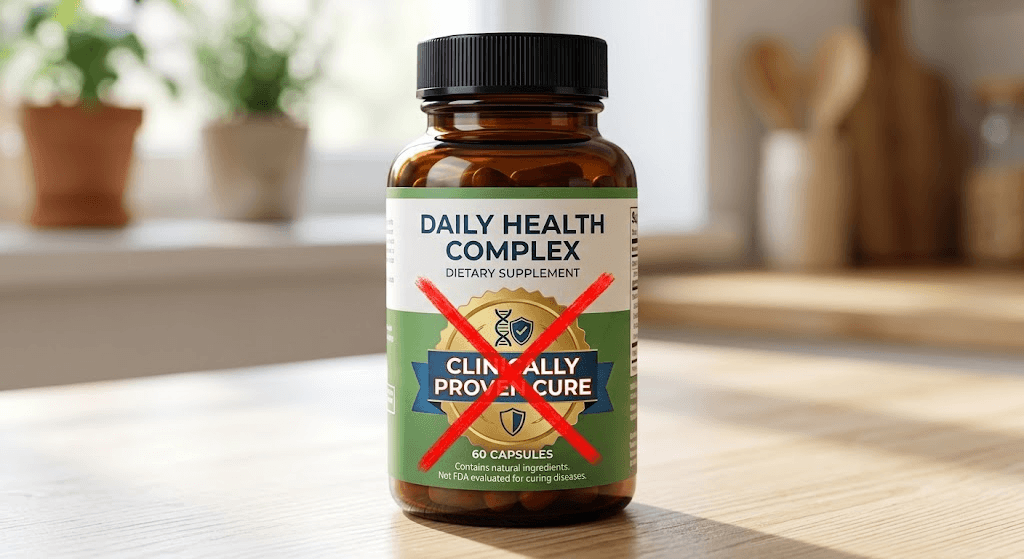
“Clinically Proven” Without Proof Scam products frequently display badges claiming the formula is “clinically proven” or “doctor recommended.” When you look for the actual clinical trial proving the complete formula works in humans, it usually does not exist.
The Free Trial Trap Many financial supplement scams do not involve the ingredients at all. Instead, they offer a “free trial” where you only pay a few dollars for shipping. Hidden in the fine print is an agreement to a monthly subscription that automatically bills your credit card for large amounts and is notoriously difficult to cancel.
How Fake Reviews Work
Customer reviews are a primary way people evaluate products, which makes them a major target for manipulation. Scam companies often generate fake credibility through several methods.
Fabricated Testimonials Many scam websites feature glowing reviews alongside photos of smiling customers. Often, these photos are purchased from stock-image websites or generated by artificial intelligence. Real supplements usually have a mix of positive and negative reviews, reflecting the fact that human bodies respond differently to ingredients.
Paid or Incentivized Reviews Some companies offer free products or financial compensation in exchange for five-star reviews on major retail sites. While some platforms try to ban this practice, it remains widespread.
Fake “Review” Websites One of the most deceptive tactics involves fake review articles. A seller might create a separate website designed to look like an independent health blog or news outlet. This fake blog then “reviews” the product, gives it a perfect score, and provides a link to buy it.
Misleading Ingredient Claims
Even when a product contains real ingredients, the way those ingredients are presented can be highly deceptive.
Fairy Dusting “Fairy dusting” occurs when a company includes a high-quality, scientifically researched ingredient in their product, but uses such a tiny amount that it will have no biological effect. The manufacturer gets to print the impressive ingredient on the label without paying the cost of providing an effective dose.
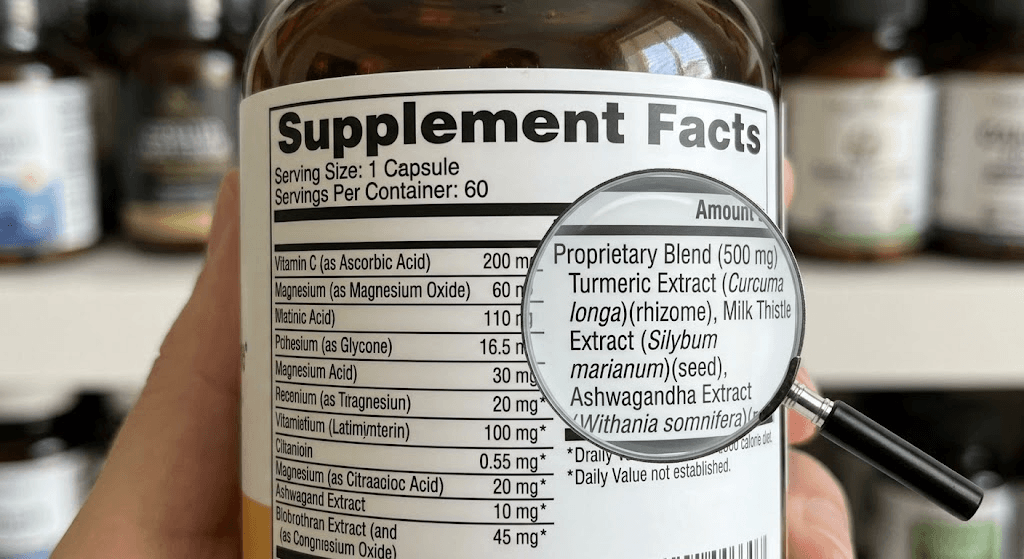
Proprietary Blends A proprietary blend is a list of ingredients grouped together under one total weight. For example, a label might show a 500mg “Focus Blend” containing five different herbs. The manufacturer does not have to disclose how much of each herb is in the blend. While some legitimate companies use blends to protect their recipes, scammers use them to hide the fact that the product is mostly cheap filler with only traces of active ingredients.
What Does the Evidence Show?
When evaluating a supplement’s claims, it is important to understand what the scientific evidence actually supports. Scammers often misrepresent scientific studies to sell products.
There are different levels of scientific evidence:
- Laboratory and Animal Studies: These are early-stage tests. If an ingredient kills a virus in a petri dish or helps mice lose weight, it does not mean it will do the same in the human body.
- Small Human Trials: These provide preliminary evidence but are often too small to prove a product works for the general public.
- Randomized Controlled Trials (RCTs): This is the gold standard of research, where a large group of humans is tested against a placebo.
- Systematic Reviews: These evaluate multiple RCTs to find a consensus.
Scam products often cite animal studies or laboratory tests as undeniable proof of human benefits. Furthermore, they will often cite a study about a single vitamin (like Vitamin C) to justify the high price of an entire multi-ingredient supplement.
Risks and Side Effects of Fraudulent Products
Falling for a supplement scam is not just a financial risk; it can be a serious health risk.
Contamination and Adulteration The FDA frequently issues warnings about dietary supplements—particularly those marketed for weight loss, sexual enhancement, and bodybuilding—that are tainted with hidden prescription drugs. These undisclosed chemicals can cause severe heart problems, stroke, or liver damage.
Heavy Metals and Bacteria Products manufactured in unverified, unregulated facilities may contain unsafe levels of lead, mercury, arsenic, or harmful bacteria. Legitimate companies pay for testing to ensure their products are free of these contaminants.
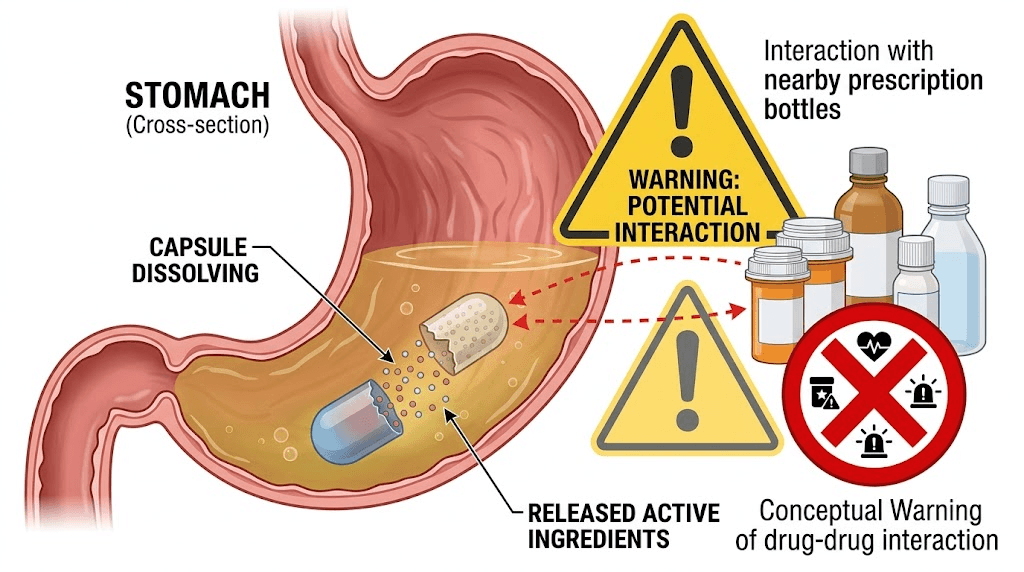
Dangerous Interactions If a product hides its true ingredients behind a proprietary blend or inaccurate label, you cannot safely check for medication interactions. Many common herbal supplements alter how the liver processes prescription blood thinners, blood pressure medications, and antidepressants.
Who Should Be Especially Careful?
While everyone should be cautious, certain groups face higher risks when consuming unverified dietary supplements:
- Pregnant or breastfeeding people: Very few supplements have been proven safe for fetal development.
- People taking prescription medications: The risk of unexpected chemical interactions is high.
- Older adults: Age changes how the liver and kidneys process substances.
- People preparing for surgery: Many supplements affect blood clotting or anesthesia and must be stopped weeks before an operation.
- Individuals with kidney or liver conditions: These organs filter out toxins; damaged organs can be easily overwhelmed by unregulated supplement doses.
When to Speak With a Healthcare Professional
You should always speak with a healthcare provider before adding a new supplement to your routine, especially if you have a pre-existing medical condition.
Do not attempt to replace prescribed medical treatments with dietary supplements. If you experience unexpected symptoms after taking a supplement—such as a racing heart, dizziness, severe stomach pain, or changes in vision—stop taking the product immediately and consult a doctor.
How to Evaluate a Supplement in This Category
To protect yourself from scams and misleading claims, use this practical checklist before purchasing any supplement:
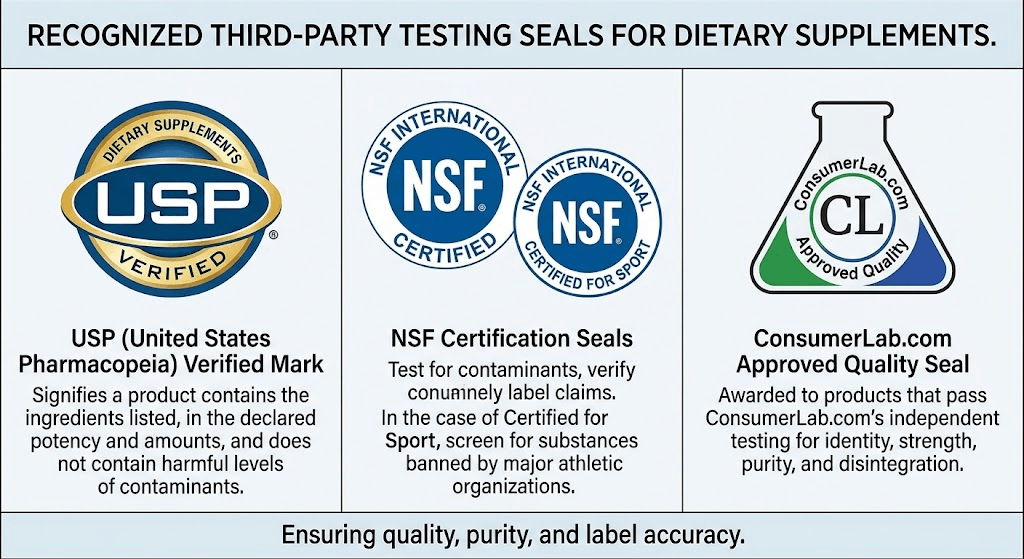
- Check for Third-Party Testing: Look for certification seals from independent organizations like USP (U.S. Pharmacopeia), NSF International, or ConsumerLab. These organizations verify that what is on the label is actually in the bottle, without harmful contaminants. Read more about understanding third-party testing to know what these seals mean.
- Look for Transparent Labels: Avoid products that hide ingredient amounts in proprietary blends. You should know exactly how many milligrams of an active ingredient you are consuming.
- Analyze the Language: Run away from products claiming to be a “miracle,” “secret discovery,” or a “guaranteed cure.”
- Check FDA Warnings: Search the FDA’s online database for tainted products or warning letters associated with the manufacturer.
- Look for Genuine Contact Information: Scammers often hide their physical address and customer service phone numbers. A reputable company will be easy to contact.
- Read the Fine Print: Ensure you are making a one-time purchase, not signing up for an expensive auto-billing subscription.
Related Product Analyses
Supplements Diary has examined several products marketed across various areas of health. These reviews evaluate their ingredient transparency, claims, pricing and limitations to help you make informed decisions.
- When looking at products making extraordinary frequency or energy claims, you can read our Tesla MedBed X analysis.
- For products marketed toward hearing support and tinnitus, see our Quietum Plus review.
- If you are exploring supplements related to glucose management, review the Sugar Defender ingredient analysis.
- For those looking into men’s health formulas, we suggest examining Prostadine’s claims.
- For individuals curious about topical and herbal approaches to nail health, read our guide to Kerassentials.
Frequently Asked Questions
Are all dietary supplements approved by the FDA?
No. The FDA does not approve dietary supplements for safety or efficacy before they go to market. The FDA only takes action against a product after it has been proven unsafe or if the company makes illegal disease-curing claims.
What does a “proprietary blend” mean?
A proprietary blend is a mixture of ingredients listed under a single total weight. While legal, it prevents the consumer from knowing the exact dose of each individual ingredient, making it difficult to judge the product’s effectiveness or safety.
How can I tell if a product review is fake?
Fake reviews often use extreme, overly enthusiastic language, lack specific details about the product, and cluster around specific dates. Be cautious of review sites that only show 5-star ratings or websites that immediately redirect you to a sales page.
Is it safe to order supplements through a free trial?
Many “free trials” in the supplement industry are associated with hidden subscription models. Always read the terms and conditions carefully; you may be agreeing to automatic monthly charges that are very difficult to cancel.
Conclusion
The supplement industry offers many valuable products that can genuinely support a healthy lifestyle, but it is also crowded with scams, fake reviews, and misleading claims.
Protecting your health and your wallet requires a careful, skeptical approach. Always prioritize products with transparent labels and independent third-party testing. Remember that no dietary supplement can legally claim to cure or prevent a disease, and “natural” does not inherently mean safe. By looking past aggressive marketing and focusing on evidence and transparency, you can make informed decisions that safely complement your overall wellness routine. Always discuss new supplements with a healthcare professional to ensure they are appropriate for your individual health needs.
References
- U.S. Food and Drug Administration – Dietary Supplements – https://www.fda.gov/food/dietary-supplements
- U.S. Food and Drug Administration – Tainted Products Marketed as Dietary Supplements – https://www.fda.gov/drugs/medication-health-fraud/tainted-products-marketed-dietary-supplements
- Federal Trade Commission – Health and Fitness Claims – https://www.ftc.gov/news-events/topics/truth-advertising/health-claims
- National Institutes of Health, Office of Dietary Supplements – Dietary Supplements: What You Need to Know – https://ods.od.nih.gov/factsheets/WYNTK-Consumer/
- National Center for Complementary and Integrative Health – Using Dietary Supplements Wisely – https://www.nccih.nih.gov/health/using-dietary-supplements-wisely

Dr. Emma Myers is a medical student at UNC School of Medicine in Chapel Hill, with a focus on autoimmune dermatology. She grew up in Durham, North Carolina, and completed her undergraduate studies at the University of Virginia, majoring in Human Biology and Spanish. Emma has worked as a medical assistant in dermatology, gaining experience in cosmetic and medical dermatology. She leads advocacy groups for autoimmune skin disorders and is involved in research on autoimmune diseases, skin safety, and early diagnosis. Outside of medicine, she is a certified yoga sculpt instructor and enjoys outdoor activities with her dog.