
Walking down a supplement aisle or browsing online stores can feel overwhelming. With thousands of bottles promising better health, more energy, or sharper focus, it is hard to know which products actually contain what is listed on the label. Because the dietary supplement industry is not regulated in the exact same way as prescription medication, the burden of ensuring product quality often falls on the consumer.
One of the most reliable ways to evaluate a product’s quality is to look for third-party testing. But how do you know if a company’s testing claims are genuine? This article explains what independent testing actually means, which certification seals you can trust, and how to spot misleading marketing. We will also explore how to evaluate a supplement’s overall transparency so you can make safer, more informed choices for your health.
Quick Answer
To check if a supplement is third-party tested, look for an official certification seal on the bottle from recognized independent organizations like NSF International, USP (United States Pharmacopeia), Informed Choice, or ConsumerLab.com. You can also visit these organizations’ official websites and search their online databases to verify that the specific product is actively certified.
What Is Third-Party Supplement Testing?
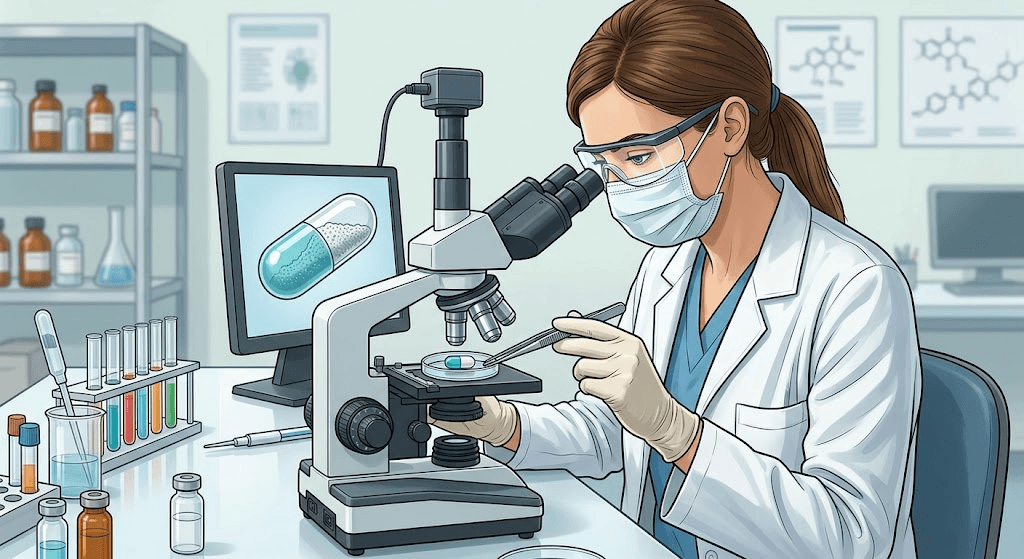
Third-party testing occurs when a manufacturer sends its product to an independent, unbiased laboratory to be evaluated. This outside laboratory is not affiliated with the supplement company and has no financial interest in whether the product sells.
The goal of this testing is to confirm that the supplement is safe, pure, and accurately labeled. Without third-party testing, consumers have to rely entirely on the manufacturer’s own word that the product inside the bottle matches the ingredients listed on the label.
Why Independent Testing Is Necessary
Many people assume that dietary supplements are strictly tested by the U.S. Food and Drug Administration (FDA) before they go on sale. However, under current U.S. law, the FDA does not approve dietary supplements for safety or effectiveness before they reach the consumer market.
Instead, manufacturers are responsible for ensuring their own products are safe and that their label claims are accurate. The FDA generally only steps in after a product is on the market if it is found to be unsafe or misbranded.
Because of this regulatory framework, several issues can occur in the manufacturing process:
- Poor quality control: Ingredients can be accidentally mixed, diluted, or contaminated.
- Adulteration: Unapproved or undisclosed chemicals (including prescription drugs) may be illegally added to the formula.
- Ingredient degradation: Active compounds may lose their potency before the expiration date.
Third-party testing acts as a voluntary safeguard, bridging the gap between manufacturer promises and actual consumer safety.
What Do Third-Party Labs Test For?
When a reputable independent organization evaluates a dietary supplement, they typically test for three main factors:
1. Identity and Potency
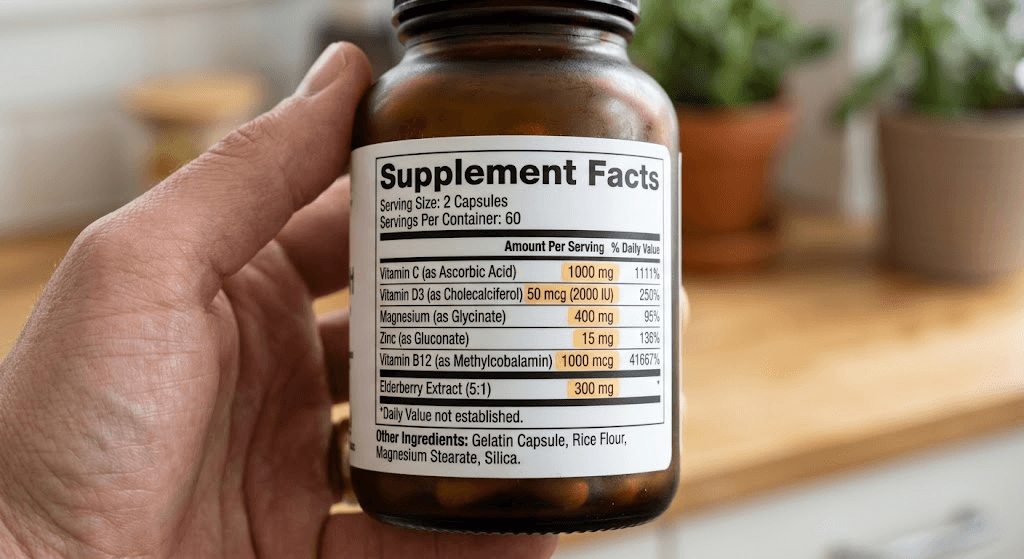
The lab checks whether the ingredients listed on the supplement facts panel are actually in the product. They also verify the dosage. For example, if a label claims the product contains 500 mg of Vitamin C, the independent lab ensures it contains exactly that amount—no more and no less.
2. Purity and Contaminants
Supplements can become contaminated during harvesting, processing, or packaging. Third-party labs test for harmful substances, including:
- Heavy metals (such as lead, arsenic, mercury, and cadmium)
- Mold, yeast, and dangerous bacteria (like E. coli or Salmonella)
- Pesticides and herbicides
3. Bioavailability and Dissolution
Some testing organizations, like USP, test whether a pill or capsule properly breaks down in the digestive tract. If a supplement does not dissolve properly, your body cannot absorb the nutrients, rendering the product useless.
How to Identify a Genuine Third-Party Certification
Not all testing claims are created equal. Some companies use vague language like “Quality Tested” or “Lab Verified” without ever using an independent facility. To ensure a product has been rigorously evaluated, look for seals from these widely recognized organizations:
- NSF International: NSF offers standard certification as well as an “NSF Certified for Sport” seal, which ensures the product is free of substances banned by major athletic organizations.
- USP (United States Pharmacopeia): A USP Verified mark means the supplement contains the ingredients listed on the label in the declared strength and amounts, and that it does not contain harmful levels of specified contaminants.
- ConsumerLab.com: This organization purchases supplements directly from store shelves and tests them independently. Products that pass their strict standards can license the ConsumerLab Approved Quality seal.
- Informed Choice: Frequently used for sports nutrition, this certification monitors products for banned substances and manufacturing impurities.
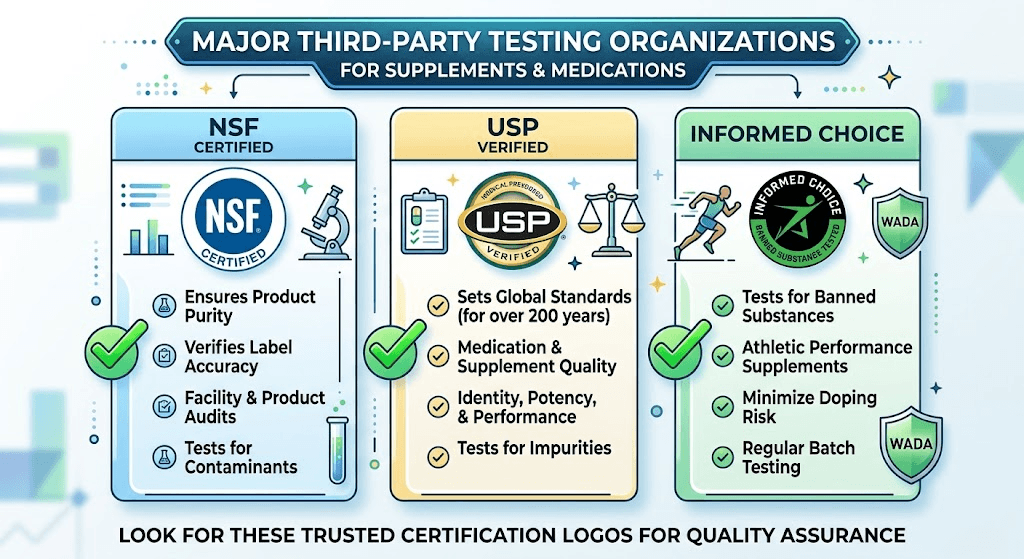
A crucial tip: Do not just trust a logo on a bottle, as counterfeit seals do exist. If you want to be completely sure, visit the official website of NSF, USP, or Informed Choice and type the product name into their certified product database.
What Does the Evidence Show?
Research into the supplement industry consistently highlights the need for independent verification.
- Label Inaccuracies: Systematic reviews and independent laboratory tests routinely find that many supplements contain significantly less of the active ingredient than advertised.
- Hidden Ingredients: The FDA maintains a public database of tainted supplements. Over the last decade, hundreds of products marketed for weight loss, muscle building, and sexual enhancement have been found to contain hidden, unapproved prescription drugs.
- Heavy Metal Contamination: Observational studies investigating botanical and herbal supplements have occasionally found unacceptable levels of heavy metals, reinforcing the need for purity testing.
While many reputable companies follow strict Good Manufacturing Practices (GMP), the consistent presence of mislabeled or contaminated products in the broader market makes third-party testing a valuable tool for consumers. Check our guide to supplement safety for more detailed information on FDA regulations and GMP standards.
Risks of Untested Supplements
Taking a supplement that has not been independently verified carries several potential risks:
- Ineffectiveness: You may be paying for a product that lacks the active ingredients necessary to provide any potential benefit.
- Toxicity from Contaminants: Long-term exposure to heavy metals or mold can lead to serious health issues, including neurological and organ damage.
- Dangerous Medication Interactions: If a supplement contains undisclosed ingredients or higher doses than listed, it can negatively interact with prescription medications you are already taking.
- Allergic Reactions: Untested facilities may have poor cross-contamination controls, putting individuals with severe allergies (like soy, gluten, or dairy) at risk.
Who Should Be Especially Careful?
While everyone should prioritize tested supplements, certain groups face higher risks and should strictly avoid untested products:
- Pregnant or breastfeeding people: Contaminants can pass to the fetus or infant.
- People taking prescription medication: Accurate dosages are critical to avoid dangerous interactions.
- Children and adolescents: Young bodies are more vulnerable to heavy metals and incorrect dosages.
- Competitive athletes: Unintentionally consuming banned substances from an adulterated supplement can result in severe professional penalties.
- People preparing for surgery: Unknown ingredients can interfere with anesthesia or blood clotting.
- People with liver or kidney conditions: These organs process supplements, and inaccurate dosages or contaminants can cause dangerous strain.
When to Speak With a Healthcare Professional
No dietary supplement should be used to self-treat a medical condition. You should consult a healthcare provider if:
- You are experiencing new, unexplained symptoms.
- You are currently managing a chronic illness (such as diabetes, cardiovascular disease, or high blood pressure).
- You experience adverse side effects—such as a rapid heart rate, dizziness, nausea, or a rash—after starting a new supplement.
A doctor or registered dietitian can help you determine if a supplement is actually necessary for your health and guide you toward reliable, safe brands.
How to Evaluate a Supplement in This Category
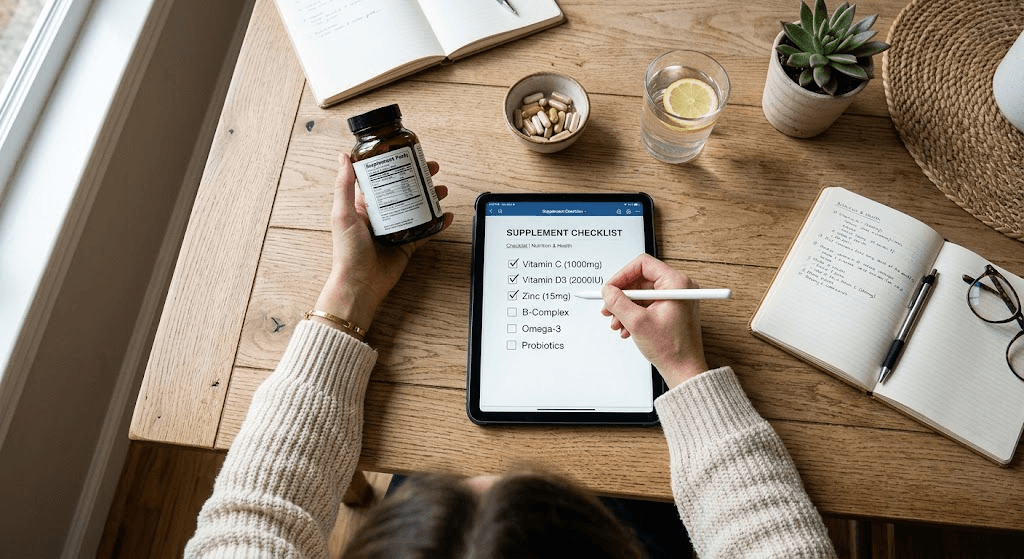
When considering a new supplement, use this practical checklist to evaluate its safety and transparency:
- Check for recognized seals: Look for NSF, USP, ConsumerLab, or Informed Choice logos on the label.
- Verify the seal: Search the certification organization’s online database to ensure the product is actually registered.
- Look for ingredient transparency: Avoid products that hide ingredient amounts behind “proprietary blends.” You deserve to know exactly how much of each ingredient you are taking.
- Watch out for unrealistic claims: If a product claims to cure a disease, guarantee extreme weight loss, or replace a prescription medication, avoid it. These claims are not legally permitted and are a sign of an untrustworthy company.
- Ask for a Certificate of Analysis (COA): If a company claims they do independent testing but lacks a seal, ask their customer service for a recent COA. This is a document from a lab showing exact test results for that batch. If they refuse to provide it, consider choosing a different brand.
- Check the FDA’s tainted supplements list: Quickly search the FDA’s database to ensure the brand hasn’t been flagged for adulteration in the past.
Related Product Analyses
Supplements Diary has also examined several products marketed for various areas of health. These reviews evaluate their ingredient transparency, claims, pricing, and limitations to help you make informed decisions.
- TonicGreens: You can read our TonicGreens review to understand how this formula breaks down its ingredient list and what evidence supports its components.
- Quietum Plus: For those looking into auditory support, our Quietum Plus ingredient analysis examines the evidence behind its specific blend.
- Sugar Defender: Our complete Sugar Defender review looks at the labeling practices and formula transparency of this product.
- Sight Fresh: Readers interested in vision support can explore our Sight Fresh analysis for a closer look at its formulation.
- Kerassentials: We also evaluate the claims and safety profile of the Kerassentials formulation.
(Note: These reviews analyze product transparency and claims; they do not suggest these specific products serve as medical treatments.)
Frequently Asked Questions
Is “lab tested” the same as “third-party tested”?
No. A company can test its own products in its own in-house laboratory and accurately claim they are “lab tested.” Third-party testing specifically means an independent, unaffiliated facility conducted the tests to ensure completely unbiased results.
Does third-party testing mean the supplement works?
No. Third-party testing only verifies that the supplement is safe, pure, and contains what the label says. It does not prove that the formula is effective at improving your health or treating a symptom.
Do all good supplements have a third-party seal?
Not necessarily. Third-party testing can be expensive, and some smaller, high-quality companies may use independent labs without paying for the official seal. However, reputable companies will always provide a Certificate of Analysis (COA) from an independent lab upon request.
Can I trust supplements sold on major online retailers?
You should always verify products yourself. While major retailers have introduced stricter quality control policies, third-party investigations still regularly find untested, mislabeled, or adulterated supplements sold on large online marketplaces.
Conclusion
Understanding how to verify third-party supplement testing is one of the most effective ways to protect your health and your wallet. Because dietary supplements are not proactively tested by the FDA before they hit the shelves, independent organizations like NSF, USP, and ConsumerLab provide essential oversight.
Always look for recognized certification seals, demand transparent ingredient lists, and be skeptical of products that rely on secret proprietary blends or exaggerated health claims. Most importantly, remember that supplements are designed to support general wellness—they are not replacements for a balanced diet, healthy lifestyle, or professional medical care.
References
- National Institutes of Health (NIH) Office of Dietary Supplements – Dietary Supplements: What You Need to Know – https://ods.odnih.gov/factsheets/WYNTK-Consumer/
- U.S. Food and Drug Administration (FDA) – Dietary Supplements – https://www.fda.gov/food/dietary-supplements
- U.S. Food and Drug Administration (FDA) – Tainted Supplements Database – https://www.fda.gov/drugs/medication-health-fraud/tainted-products-marketed-dietary-supplements
- NSF International – Dietary Supplements Certification – https://www.nsf.org/consumer-resources/health-and-safety-tips/dietary-supplements
- United States Pharmacopeia (USP) – USP Verified Mark – https://www.usp.org/verification-services/verified-mark

Dr. Emma Myers is a medical student at UNC School of Medicine in Chapel Hill, with a focus on autoimmune dermatology. She grew up in Durham, North Carolina, and completed her undergraduate studies at the University of Virginia, majoring in Human Biology and Spanish. Emma has worked as a medical assistant in dermatology, gaining experience in cosmetic and medical dermatology. She leads advocacy groups for autoimmune skin disorders and is involved in research on autoimmune diseases, skin safety, and early diagnosis. Outside of medicine, she is a certified yoga sculpt instructor and enjoys outdoor activities with her dog.