
Walking down the dietary supplement aisle or browsing products online can feel overwhelming. With thousands of bottles claiming to support everything from energy levels to joint health, it is easy to get distracted by flashy marketing and bold promises. However, the most important information on any supplement bottle is not on the front—it is on the back.
Learning how to read a Supplement Facts label is your first line of defense as a consumer. This standardized panel provides the critical details you need to know exactly what you are putting into your body, how much of it you are taking, and what hidden fillers might be included.
This guide will explain how to decode serving sizes, understand daily values, and spot misleading proprietary blends so you can make safe, informed decisions for your health.
Quick Answer
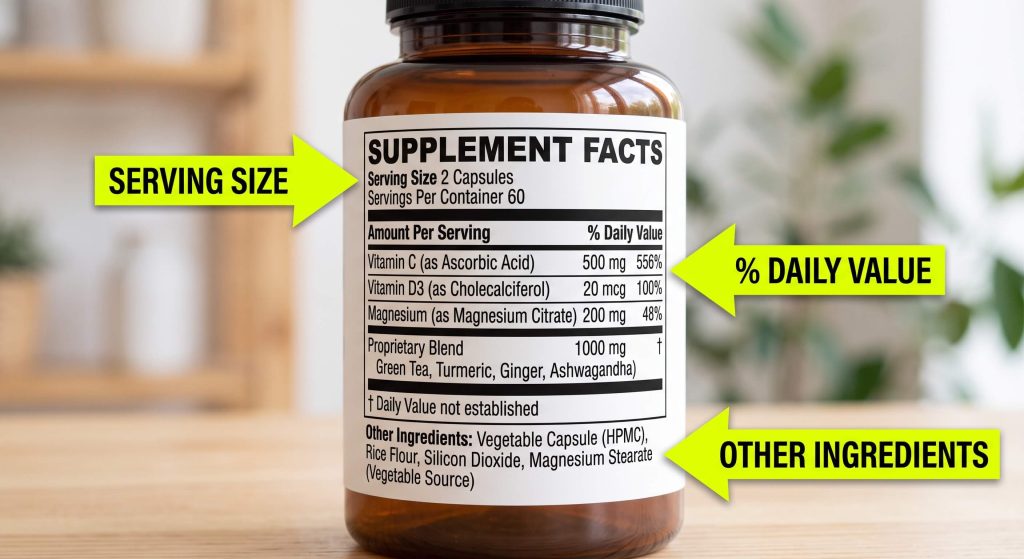
To read a Supplement Facts label, start by checking the Serving Size to see how many pills make up one dose. Next, review the % Daily Value (DV) to understand how much of your daily nutrient requirement is in each serving. Look for transparent, specific ingredient amounts rather than hidden “proprietary blends,” and always check the Other Ingredients section for potential allergens, fillers, or artificial colors.
What Is a Supplement Facts Label?
A Supplement Facts label is a standardized information panel mandated by the U.S. Food and Drug Administration (FDA) for all dietary supplements sold in the United States.
Similar to the Nutrition Facts panel found on food packaging, this label is designed to give consumers a clear, uniform breakdown of what a product contains. Whether you are looking at a daily multivitamin, a plant-based botanical, or a specialized product like our PrimeBiome review examines, the format of the label is required to follow strict federal guidelines.
The label must list the names and quantities of active dietary ingredients, the serving size, the number of servings per container, and any additional inactive ingredients used to manufacture the supplement.
Common Causes of Label Confusion
Even though the FDA standardizes these labels, they can still be highly confusing. Common reasons consumers struggle to understand supplement labels include:
- Serving size variations: A bottle may state “1,000 mg of Vitamin C” on the front, but the Supplement Facts label might reveal that you need to take three large capsules to get that amount.
- Hidden blends: Manufacturers sometimes group several ingredients together under a trademarked name, hiding the exact amount of each individual component.
- Unfamiliar terminology: Words like “excipients,” “binders,” or chemical names for common vitamins can easily confuse buyers.
- The “Daily Value Not Established” symbol: Seeing a symbol instead of a percentage can leave buyers wondering if an ingredient is safe or necessary.
How to Understand Serving Sizes and Dosages
The very first lines you should read on any Supplement Facts label are the Serving Size and the Servings Per Container.
The serving size tells you exactly how much of the product you need to consume to get the nutrient amounts listed on the rest of the label. For example, if the serving size is two gummies, and the label says the product contains 50 mg of zinc, taking only one gummy means you are only getting 25 mg of zinc.
The servings per container tell you how long the bottle will last. A bottle containing 60 capsules with a serving size of two capsules will only last for a 30-day supply. Always calculate the true cost of a supplement based on the number of daily servings it provides, not just the total pill count.
Common Ingredients and Label Terminology
To evaluate a supplement properly, you need to understand the different sections of the label and the terminology manufacturers use.
Active Dietary Ingredients
These are the vitamins, minerals, herbs, or amino acids that are intended to provide a nutritional or physiological effect. They are usually listed with their amount per serving (measured in grams, milligrams, or micrograms).
Percent Daily Value (%DV)
The %DV tells you how much a serving of the supplement contributes to your total daily diet for a specific nutrient. If a vitamin lists a 50% DV, it provides half of the amount the FDA recommends an average adult consume in a single day.
If you see a cross or an asterisk (*) in this column, it means Daily Value not established. This simply means the FDA has not set an official daily recommended intake for that specific botanical or compound. It does not automatically mean the ingredient is unsafe, but it does require you to do independent research on safe dosages.
Proprietary Blends
A proprietary blend is a mixture of ingredients listed as a single group. The label will show the total weight of the entire blend, but it will not tell you how much of each individual ingredient is inside.
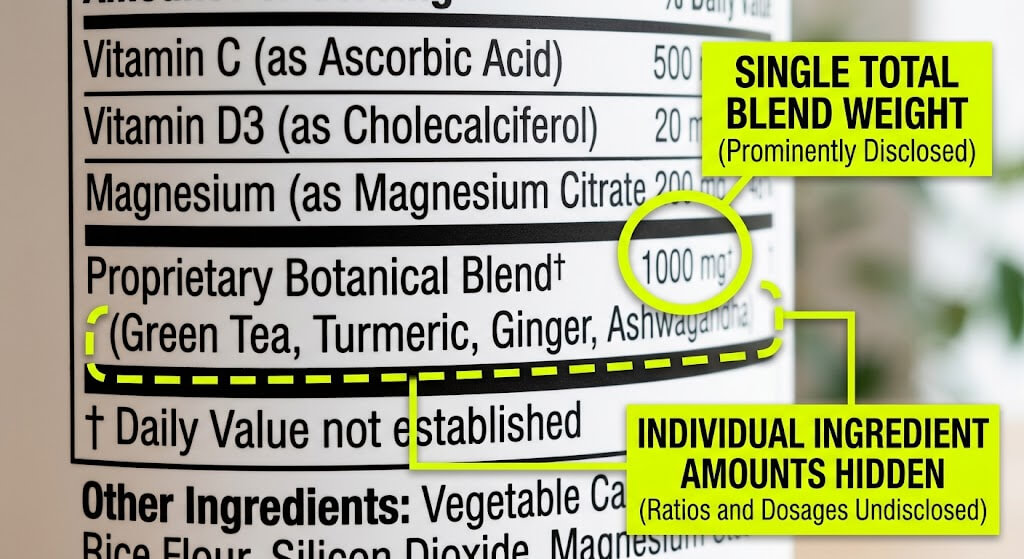
Manufacturers often claim this protects their “secret recipes” from competitors. However, for consumers, proprietary blends can be risky. You cannot tell if you are getting an effective dose of the most important ingredients, or if the blend is mostly composed of the cheapest ingredients. We frequently discuss the limitations of these blends in the Sugar Defender ingredient analysis and other detailed reviews.
Other Ingredients (Inactive Ingredients)
Found at the very bottom of the label, this section lists ingredients that do not provide nutritional benefits but are necessary to create the product. These are listed in descending order by weight and often include:
- Binders and fillers: Cellulose, rice flour, or magnesium stearate used to hold tablets together or fill capsules.
- Capsule materials: Gelatin (derived from animals) or hypromellose (a vegan alternative).
- Flavorings and colorings: Natural flavors, artificial sweeteners, or food dyes.
- Allergens: This section must clearly state if the product contains major allergens like soy, dairy, nuts, or wheat.
What Does the Evidence Show?
When reading a label, it is critical to understand the difference between a supplement and a prescription drug.
The FDA does not approve dietary supplements for safety or effectiveness before they are sold to the public. The responsibility lies with the manufacturer to ensure their label is accurate and their product is safe.
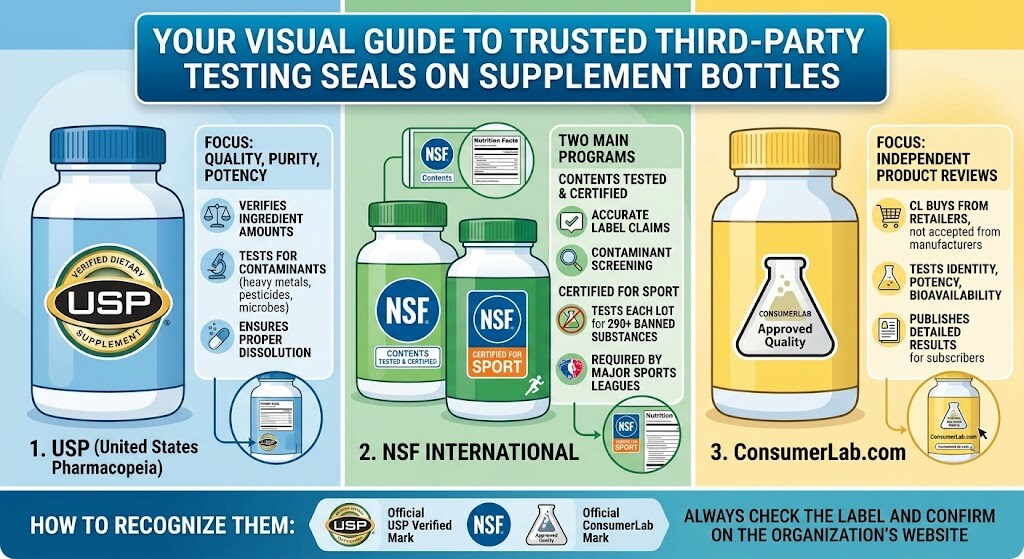
Because pre-market approval is not required, the evidence supporting a supplement’s quality usually comes from third-party testing. Independent organizations test supplements to verify that what is listed on the label is actually in the bottle, and that the product is free from harmful levels of heavy metals, pesticides, and microbes.
When looking at a label, check for certification seals from recognized organizations such as:
- USP (United States Pharmacopeia)
- NSF International
- ConsumerLab
Keep in mind that while these seals verify the quality of the ingredients, they do not prove that the supplement will cure or treat any medical condition.
Risks and Side Effects
Failing to read a Supplement Facts label carefully can lead to unwanted risks.
One primary risk is nutrient toxicity. If you take a multivitamin, a standalone vitamin D supplement, and an enriched protein powder, you could accidentally consume dangerously high levels of certain fat-soluble vitamins (like Vitamins A, D, E, and K). Over-consuming these can lead to liver toxicity or cardiovascular issues over time.
Additionally, combining several supplements that contain proprietary blends increases the risk of unexpected medication interactions. If you do not know the exact dosage of herbal ingredients in a formula, it is very difficult for a doctor or pharmacist to predict how it will react with your prescription medications. For a broader look at this topic, you can read our guide to supplement safety.
Who Should Be Especially Careful?
Certain groups of people need to be highly vigilant when reading supplement labels, as their bodies may react differently to specific ingredients:
- Pregnant or breastfeeding people: Many herbal ingredients have not been proven safe for fetal development.
- Children and adolescents: Supplements designed for adults often contain dosages that are too high for children.
- Older adults: Age-related changes in liver and kidney function can affect how the body processes supplements.
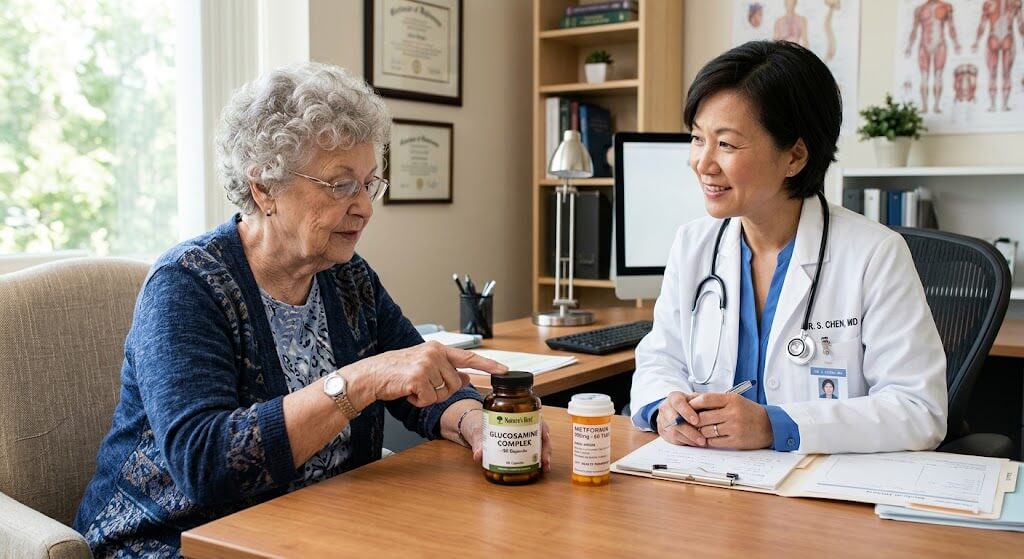
- People taking prescription medication: Herbs like St. John’s Wort or high doses of Vitamin K can severely disrupt how medications work.
- People preparing for surgery: Certain supplements can increase bleeding risks or interfere with anesthesia.
When to Speak With a Healthcare Professional
You should always speak with a healthcare professional before adding a new dietary supplement to your routine, especially if you are attempting to manage a specific health symptom.
Dietary supplements are meant to support general wellness; they are not intended to diagnose, treat, cure, or prevent any disease. If you are experiencing chronic pain, sudden changes in your vision, severe digestive distress, or unexplained fatigue, you should seek professional medical evaluation rather than trying to manage the symptoms independently with over-the-counter products.
Furthermore, if you experience an adverse reaction—such as a rash, rapid heart rate, or severe nausea—after starting a new supplement, stop taking the product immediately and contact a doctor.
How to Evaluate a Supplement in This Category
Before purchasing any dietary supplement, use this practical checklist to evaluate the label:
- Are the ingredient amounts transparent? Avoid products that hide their main active ingredients behind proprietary blends.
- Is the serving size realistic? Ensure you are comfortable taking the required number of pills daily.
- Are there third-party testing seals? Look for NSF, USP, or independent lab verification.
- Does the “Other Ingredients” section look safe? Check for hidden allergens, artificial dyes, or excessive fillers.
- Are the claims grounded in reality? The label should not promise to cure diseases or replace prescription medications.
- Are there proper warning labels? Reputable companies list potential medication interactions and state who should avoid the product.
Related Product Analyses
Supplements Diary has also examined several products marketed for various areas of health. These reviews evaluate their ingredient transparency, claims, pricing, and limitations. By applying the label-reading skills discussed above, you can better understand these formulas:
- Our Quietum Plus review: We examine this product’s ingredient list, which is frequently marketed toward individuals looking for ear health and auditory support.
- Our Prostadine analysis: This review breaks down a liquid-drop dietary supplement format, discussing how to read the dosages per dropper.
- Our Sight Fresh review: We look at the nutritional panel of this formula, analyzing the evidence behind its botanical ingredients.
Frequently Asked Questions
What does “Daily Value not established” mean?
This phrase, often represented by an asterisk on the label, means the FDA has not set an official daily requirement for that specific ingredient. It is very common for herbal extracts, specialized amino acids, and botanical blends, as the government only sets daily values for essential vitamins and minerals.
Are proprietary blends safe?
Proprietary blends are not inherently dangerous, but they lack transparency. Because the manufacturer does not disclose the exact amount of each ingredient in the blend, it is impossible to know if you are receiving an effective, science-backed dose or if the product contains too much of a cheap filler ingredient.
Do supplements require FDA approval before sale?
No. Unlike prescription drugs, dietary supplements do not undergo FDA testing or approval before they hit the market. Manufacturers are legally responsible for ensuring their products are safe and that their labels are truthful. The FDA generally only takes action after a product has been found to be unsafe or misbranded.
How do I know if a supplement has allergens?
Federal law requires manufacturers to clearly list the presence of major food allergens (milk, eggs, fish, crustacean shellfish, tree nuts, peanuts, wheat, and soybeans). This information will typically be located just beneath the “Other Ingredients” list at the bottom of the Supplement Facts panel.
What is the difference between active and other ingredients?
Active ingredients are the components intended to provide a health benefit, such as Vitamin C, calcium, or ashwagandha extract. “Other ingredients” are inactive components needed to manufacture the product, such as the gelatin used to make a capsule shell, natural flavorings, or flow agents that keep powders from clumping in the manufacturing machines.
Conclusion
Understanding how to read a Supplement Facts label is an essential skill for protecting your health and your wallet. By paying close attention to serving sizes, demanding transparency instead of proprietary blends, and verifying quality through third-party testing seals, you can confidently navigate the supplement aisle.
Remember that no dietary supplement can replace a balanced diet, a healthy lifestyle, or prescribed medical treatments. The phrase “natural” does not automatically mean safe. Always review a product’s label carefully, evaluate the limitations of its ingredients, and consult with a healthcare professional before introducing any new supplement into your daily routine.
References
U.S. Food and Drug Administration (FDA): “Information for Consumers on Using Dietary Supplements” (Details regulatory oversight and label reading). URL: https://www.fda.gov/food/dietary-supplements
National Institutes of Health (NIH) Office of Dietary Supplements: “Dietary Supplements: What You Need to Know” (Details the %DV, third-party testing, and safety). URL: https://ods.od.nih.gov/factsheets/WYNTK-Consumer/
National Center for Complementary and Integrative Health (NCCIH): “Using Dietary Supplements Wisely” (Discusses interactions, hidden ingredients, and evaluating claims). URL: https://www.nccih.nih.gov/health/using-dietary-supplements-wisely

Dr. Ryan Cooper is a physician affiliated with Duke University and Duke University Health System. He specializes in internal medicine and serves as an intern within the Department of Medicine. His education includes medical training at Drexel University College of Medicine, followed by residency at Penn State Hershey Medical Center. Dr. Cooper is board-certified by the American Board of Internal Medicine and is a member of professional organizations such as the American College of Physicians and the Society of Hospital Medicine. His research includes publications on acute kidney injury and renal oxalosis, emphasizing his expertise in internal medicine and nephrology.